You've built your expertise, passed your licenses, and maybe even survived your first year in production. But here's the problem: the marketing "advice" you're getting reads like it was written for SaaS companies or e-commerce brands, not insurance professionals navigating compliance restrictions and working with skeptical prospects who've been burned before.
Most insurance agent marketing strategies fail because they're built backward. They start with tactics (post on LinkedIn! run Facebook ads!) instead of addressing the real issue: prospects don't understand what you actually do until they're sitting across from you, and by then you've already spent weeks chasing them.
The good news? You don't need a marketing degree or a six-figure ad budget. You need a system that turns complex concepts into clear conversations and moves people from curiosity to commitment without feeling pushy.
Why Traditional Insurance Agent Marketing Strategies Fall Short
Let's be honest about what doesn't work anymore.
Cold calling still generates some activity, but the conversion rate has tanked. People screen calls now. The "smile and dial" approach burns through hours for minimal appointments.
Networking events produce relationships, sure. But they're inefficient. You're competing for attention with every other advisor in the room, and the quality of prospects is wildly inconsistent.
Here's the bigger issue: most insurance agent marketing strategies treat education and sales as separate activities. You "market" to get attention, then you "sell" when they show up. But prospects today are doing their own research before they ever contact you. If your marketing doesn't educate, you're not even making the shortlist.
The shift that matters in 2026 is this: your marketing needs to do the heavy lifting of education before the first conversation. Not after. Not during. Before.
Building a Marketing System That Actually Generates Appointments
Let's talk systems, not tactics.
A tactic is "post three times a week on LinkedIn." A system is "identify the five questions prospects ask most often, create content that answers each one, distribute that content across three channels, and track which answers lead to booked appointments."
See the difference?
Here's what a functional marketing system looks like for insurance agents:
Step 1: Identify Your Prospect's Entry Point
Most people don't wake up thinking "I need to buy life insurance today." They wake up worried about retirement income, confused about Medicare, or concerned about protecting their business.
Your marketing should address the worry, not the product.
Step 2: Create Education-First Content
This is where most agents freeze. "What do I even create?"
Start with the questions you answer every week in client meetings:
These questions are your content roadmap. Answer them clearly, without jargon, in a format you can share repeatedly.
Step 3: Build a Repeatable Distribution System
Creating content once doesn't count as marketing. You need a distribution engine.
- Email sequences that educate over time
- Short-form video that explains one concept per piece
- A simple landing page that captures contact info in exchange for value
- A follow-up system that doesn't rely on you remembering to check in
This is where video marketing for financial advisors becomes a leverage point. A five-minute video explaining the difference between fixed and indexed annuities can work for you 24/7.

Digital Lead Generation That Doesn't Feel Slimy
Let's address the elephant in the room: most online lead generation feels gross because it is gross.
You've seen the ads. "Download our free guide!" Then you get hammered with sales calls. Or worse, your contact info gets sold to five other agents.
Here's a better approach that treats prospects like adults.
Content-First Lead Magnets
Instead of bribing someone with a generic PDF, offer something that actually solves a problem they have right now.
Examples that work:
These tools give value first. They also pre-qualify the prospect by revealing what they actually care about.
When someone downloads your "How to Evaluate Your Current Annuity" guide, they're telling you they have an annuity and they're not sure if it's working. That's a warm lead, not a cold one.
Email Sequences That Educate, Not Pitch
Once someone opts in, most agents immediately go for the appointment. Too soon.
Your first three emails should deliver pure value with zero sales pressure:
- Email 1: Here's the thing you downloaded, plus one insight you didn't expect
- Email 2: Here's a common mistake people make related to this topic
- Email 3: Here's a framework for thinking about this decision
Only after you've established credibility do you suggest a conversation.
This approach aligns with effective strategies to generate leads online, which emphasize building trust through consistent value delivery before asking for a meeting.
SEO for Local Insurance Agents
You don't need to rank nationally for "best life insurance." You need to rank locally for "annuity specialist near [your city]."
Focus on:
- Google Business Profile optimization (reviews, photos, posts)
- Location-specific content (retirement planning for [city] residents)
- Service area pages that actually explain what you do
Most agents skip this because it's not flashy. But local SEO compounds over time. Three years from now, you'll still be getting calls from content you publish this month.
Campaign-Based Marketing vs. Random Acts of Content
Here's where most insurance agent marketing strategies completely fall apart.
You post something on LinkedIn. You send an email newsletter. You maybe run a Facebook ad. None of it connects. It's all random.
Campaign-based marketing is different. You pick one topic, create multiple content pieces around it, and run them as a coordinated sequence.
Example: You want to book more annuity reviews.
Campaign Structure
| Week | Content Piece | Channel | Goal |
|---|
| 1 | "3 Annuity Mistakes Retirees Make" article | Email + LinkedIn | Awareness |
| 2 | Short video: "How to Review Your Current Annuity" | Email + Facebook | Education |
| 3 | Case study: Client who discovered hidden fees | Email only | Credibility |
| 4 | "Book Your Annuity Review" call-to-action | All channels | Conversion |
Each piece builds on the last. By week four, prospects have seen your name four times, learned something valuable each time, and are primed for a conversation.
This is the difference between shouting into the void and running an actual system.
Using Pre-Built Templates to Save Time
You don't have to build every campaign from scratch.
The smartest agents use templates designed specifically for insurance professionals. Pre-written email sequences. Video scripts. Landing page copy. All built to stay compliant while actually converting.
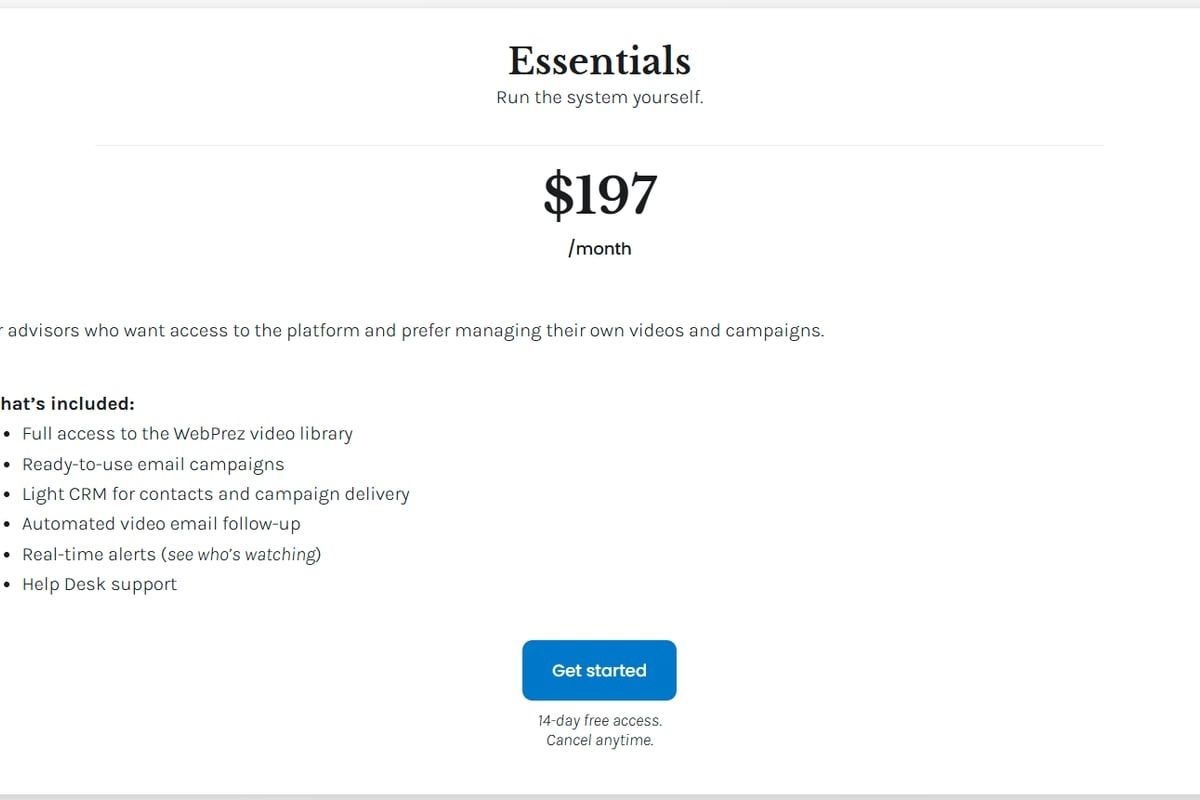
A platform like WebPrez includes pre-built campaign templates across annuities, life insurance, retirement income, and estate planning. Instead of staring at a blank screen wondering what to write, you're customizing proven frameworks that other advisors are already using successfully.
Video Content That Converts Browsers Into Buyers
Video isn't optional anymore. It's table stakes.
But here's what most agents get wrong: they think video is about them. "Hi, I'm John, I've been in the business for 20 years, I care about my clients..."
Nobody cares. They care about their problem.
Video Content That Actually Works
Explainer videos: Break down one concept in under three minutes
- How indexed interest crediting actually works
- The difference between guaranteed and projected values
- What happens to your policy if you become disabled
Problem-solving videos: Address a specific pain point
Process videos: Show what working with you looks like
- "What happens in our first meeting"
- "How we build your retirement income plan"
- "The steps to set up a trust"
Send these videos before your first appointment. When someone shows up already understanding the basics, your meeting is 10x more productive.
The most effective insurance video content doesn't try to close the sale. It tries to start the conversation by removing confusion.

Referral Systems That Don't Rely on Asking
Let's talk about referrals honestly.
The old advice: "Just ask every client for three names."
The reality: It's awkward, clients feel pressured, and the referrals you get aren't always qualified.
Here's a better system.
Create Referral-Worthy Moments
Instead of asking for referrals, create situations where clients naturally want to refer you.
Example 1: After a client completes their estate plan, send them a short video explaining what they just did (in simple terms). Title it something like "How to explain your new trust to your kids." They'll forward it to their children, who'll see your name.
Example 2: Send quarterly "financial wellness" videos on topics adjacent to what you sold them. If they bought life insurance, send content about disability planning or long-term care. They'll share with friends who need the same guidance.
Example 3: Create a "client resource center" on your website. When your clients ask their friends "Do you have a good insurance agent?" they can say "Yeah, check out their website. They have videos that explain everything."
You're engineering referrals through valuable content, not begging for introductions.
LinkedIn for Professional Referrals
Most agents use LinkedIn wrong. They connect with everyone, post motivational quotes, and wonder why nothing happens.
Try this instead:
Connect strategically: CPAs, attorneys, business brokers, mortgage lenders. People who talk to your ideal clients every day.
Provide value first: Share articles that help their clients. Tag them when relevant. Comment thoughtfully on their posts.
Position yourself as a resource: "If any of your clients are confused about annuities, I put together a quick explainer. Happy to share."
You become the insurance specialist their network calls when questions come up. Marketing strategies that build long-term relationships focus on becoming a known resource rather than a constant salesperson.
Social Media That Builds Authority Without Wasting Time
Social media can work for insurance agents. But only if you're strategic.
Here's the framework:
Pick One Platform and Dominate It
You don't need to be on TikTok, Instagram, LinkedIn, Facebook, and Twitter. Pick the one where your ideal client actually hangs out and go deep.
For business owners and high-net-worth individuals: LinkedIn
For retirees and pre-retirees: Facebook
For younger professionals: Instagram
Post Education, Not Promotion
Every post should answer a question or solve a problem.
Good post:
"Saw three clients this week who didn't know their indexed annuity caps had decreased. If you bought an indexed annuity 3+ years ago, check your latest statement. Caps reset annually based on current rates, and they've moved significantly. Want me to review yours? Drop a comment."
Bad post:
"Excited to help another family with their financial future! Let me know if you need insurance!"
The first post demonstrates expertise. The second is noise.
Engage More Than You Post
Most agents post and ghost. They drop content and disappear.
Better approach: Spend 15 minutes daily engaging with other people's content. Comment thoughtfully. Answer questions. Be helpful.
When someone sees you consistently adding value in the comments, they check out your profile. That's when your content does the selling.
Marketing Budget Allocation for Independent Agents
Let's talk money.
How much should you spend on insurance agent marketing strategies? Industry benchmarks suggest spending 5-10% of your target gross revenue, but that's misleading for new agents.
Here's a more realistic breakdown:
| Category | New Agent (Year 1-2) | Established Agent (Year 3+) |
|---|
| Digital tools & software | $200-500/month | $500-1,000/month |
| Paid advertising | $0-500/month | $1,000-3,000/month |
| Content creation | $300-800/month | $500-1,500/month |
| Education & training | $100-300/month | $200-500/month |
| Total monthly | $600-2,100 | $2,200-6,000 |
Early on, prioritize:
- A good CRM that actually tracks follow-ups
- One solid marketing platform with pre-built campaigns
- Minimal paid ads (test small)
As you grow, add:
- Outsourced content creation (video editing, copywriting)
- Larger ad budgets with proven ROI
- Marketing automation tools
The biggest mistake new agents make is spending on ads before they have a conversion system in place. If your follow-up process is broken, more leads just means more wasted opportunities.
The Smart Money System Approach to Client Conversations
Here's where theory meets practice.
You've generated a lead. They've watched your content. They've booked an appointment. Now what?
Most agents wing it. They ask some discovery questions, pull out a product illustration, and hope for the best.
Better approach: Use a structured framework that guides every conversation.
Discovery Phase: Understand where they are financially and what keeps them up at night. This isn't about fact-finding forms. It's about uncovering what they actually care about.
Tools like Smart Money Discovery help agents generate personalized financial snapshots without making clients feel interrogated. You're surfacing gaps and priorities before you ever mention a product.
Snapshot Phase: Show them what you found. Not with jargon. Not with complex charts. With clear visuals that make sense.
"Here's where you are. Here's where you want to be. Here's the gap we need to address."
Blueprint Phase: Present the solution as a plan, not a product pitch.
"Based on what you told me, here's the blueprint I'd recommend. Let me walk you through how each piece works and why it fits your situation."
This systematic approach is one of the most effective insurance agent marketing strategies because it creates consistency. Every client gets the same quality experience, which means better reviews, more referrals, and higher close rates.

Measuring What Actually Matters
Most agents track the wrong metrics.
They look at social media followers, email open rates, and website traffic. Those are vanity metrics.
Here's what actually matters:
Key Performance Indicators for Insurance Marketing
Booked appointments per month: How many qualified prospects are you actually talking to?
Show rate: Of those booked appointments, how many actually show up? If your show rate is below 70%, your lead quality or confirmation process needs work.
Conversion rate: Of the people who show up, how many become clients? Industry average is 20-30%. If you're below that, your sales process needs refinement.
Cost per appointment: Total marketing spend divided by appointments booked. If you're spending $500 to book one appointment, you need a $10,000+ case to break even.
Client lifetime value: How much revenue does an average client generate over 3-5 years? This tells you how much you can afford to spend acquiring them.
Track these monthly. Adjust based on what the numbers tell you.
Common Marketing Mistakes That Kill Momentum
Let's talk about what doesn't work, so you can stop wasting time.
Mistake #1: Trying to be everywhere at once
You can't post daily on LinkedIn, run Facebook ads, write weekly blog posts, record YouTube videos, and send email newsletters. Not sustainably.
Pick two channels. Master them. Expand later.
Mistake #2: Talking about products, not problems
"I sell indexed universal life insurance" means nothing to a prospect. "I help business owners protect their company if they die unexpectedly" means everything.
Lead with the problem you solve, not the product you sell.
Mistake #3: Inconsistent follow-up
Someone downloads your guide. You send one follow-up email. They don't respond. You give up.
Most sales happen between touchpoint 5 and 12. If you're giving up after one or two, you're leaving money on the table.
Mistake #4: No clear call to action
Every piece of content should tell people what to do next. Not aggressively. Just clearly.
"If this resonates, here's the next step: [book a call / download this tool / watch this video]."
Mistake #5: Ignoring the client experience post-sale
Marketing doesn't stop when they buy. Your best marketing is how you treat existing clients. They become your referral engine if you stay in touch with valuable content.
Send annual reviews. Birthday cards. Educational updates. Stay top of mind so when their friend needs help, you're the obvious choice.
Many of these mistakes are covered in detail in discussions about why financial advisor marketing fails and how to avoid the common traps.
Frequently Asked Questions
What's the fastest way to generate leads as a new insurance agent?
The fastest approach combines warm outreach with digital lead magnets. Start by contacting your existing network (friends, family, former colleagues) and offering free policy reviews or financial check-ups. Simultaneously, create one valuable resource-like a retirement gap calculator or Medicare comparison guide-and promote it through local Facebook ads targeting your demographic. The combination of warm leads plus cold traffic typically generates appointments within 2-3 weeks if executed consistently.
How much should I spend on Facebook ads as an independent agent?
Start with $500-1,000 monthly if you're testing. Focus on a single objective (appointments for annuity reviews, life insurance quotes, Medicare consultations) and drive traffic to one landing page with one clear offer. Test different audiences and ad creative for 60-90 days before scaling. If you're not converting at least one appointment per $100 spent, pause ads and fix your offer or landing page first. Spending more on broken funnels just wastes money faster.
Should I hire a marketing agency or do it myself?
Most insurance-specific marketing agencies charge $2,000-5,000 monthly and take 90 days to show results. If you're producing under $300K annually, that's probably not affordable. Instead, invest in a platform that gives you pre-built campaigns, templates, and training so you can execute yourself. Once you're consistently at $500K+ and appointments are your bottleneck, consider outsourcing. But early on, learn the system yourself so you understand what actually works.
How do I market insurance products without violating compliance?
Focus on education, not promises. You can explain how products work, compare features, and discuss scenarios without making performance projections. Use phrases like "designed to," "intended to," and "may help" instead of "will" or "guarantees." Always include required disclosures. When in doubt, run content by your compliance officer. The best insurance agent marketing strategies educate prospects on how financial tools function rather than promising specific outcomes.
What content actually converts prospects into clients?
Content that addresses specific fears or confusion points converts best. Examples: "What happens to my annuity if the insurance company goes bankrupt," "How to read your life insurance policy," "Medicare Open Enrollment deadlines explained." These pieces attract people actively trying to solve a problem. Contrast with generic content like "Why you need life insurance"-everyone knows they need it, but that doesn't create urgency. Problem-specific content attracts ready-to-act prospects.
The insurance agent marketing strategies that work in 2026 share one trait: they prioritize education over promotion and systems over tactics. You don't need to outspend competitors or become a social media celebrity. You need a repeatable process that moves prospects from confusion to clarity, then from clarity to commitment. If you're ready to stop piecing together random marketing tactics and start using a proven framework built specifically for insurance professionals, WebPrez gives you the video library, campaign templates, and Smart Money System to turn complex concepts into clear client conversations that actually close.