

by
May 5, 2026
Why Financial Advisor Marketing Fails (And What Actually Works)
Most advisors are doing more marketing than ever and getting less from it. Here's what's actually broken — and the framework that fixes it.
Michael Viñal
0
11 minute read
You know what most financial advisor marketing feels like? Shouting into a void while hoping someone notices you exist. You post on LinkedIn. You send emails. You maybe run some ads. And then... crickets. Or worse, you get responses from people who aren't even close to your ideal client profile.
The problem isn't that you're doing marketing wrong. The problem is that most financial advisor marketing advice comes from people who've never sat across from a confused 62-year-old trying to explain the difference between a SPIA and an FIA. They give you tactics without context, channels without strategy, and metrics that don't translate to booked meetings.
Let's fix that.
Why Traditional Marketing Fails for Financial Advisors
Here's the uncomfortable truth: people don't wake up excited to talk about their mortality, tax inefficiency, or the fact that they're behind on retirement savings.
Your prospects are avoiding the conversation you want to have.
That's fundamentally different from selling something people actually want. Someone searching for "best running shoes" is ready to buy. Someone who needs life insurance? They're in denial, procrastinating, or convinced they'll handle it "next quarter."
This creates three specific challenges:
- Long decision cycles: Nobody buys an annuity after one email
- High complexity: Your solutions require education before they make sense
- Trust barriers: Prospects have been burned by salespeople who oversold and underdelivered
Most marketing tactics ignore all three. They assume you can nurture someone with a few emails and book a call. That works for SaaS. It doesn't work when you're asking someone to restructure their entire retirement income strategy.
The Compliance Handcuffs
Let's not forget the elephant in the room. You can't make performance projections. You can't guarantee outcomes. You can't even use certain phrases without triggering a compliance review.
Effective marketing strategies for financial advisors require navigating these constraints while still communicating value clearly. That's not easy.
You're competing against crypto bros making wild promises on YouTube while you're stuck saying "past performance doesn't guarantee future results."
The solution isn't to bend the rules. It's to build marketing that works within them by focusing on education rather than persuasion.

The Education-First Marketing Framework
Forget funnels for a minute. Think about how you actually convert a prospect into a client in real life.
You don't close them in the first meeting. You educate them. You help them see the gap between where they are and where they need to be. You give them language to understand their own situation. Then you propose a solution.
Why would your marketing be any different?
Here's the framework that actually works:
Stage 1: Awareness (They Don't Know They Have a Problem)
Your job isn't to sell here. It's to surface the problem in a way that feels relevant and urgent.
Good awareness content:
- "5 Retirement Income Mistakes That Cost Clients $100K+"
- "The SECURE Act 2.0 Change Most CPAs Are Missing"
- "Why Your Required Minimum Distribution Strategy Might Backfire in 2026"
Notice what these do. They don't pitch your services. They identify a specific, concrete problem that your ideal prospect might be experiencing without knowing it.
| Stage | Prospect Mindset | Marketing Goal | Content Type |
|---|---|---|---|
| Awareness | "I don't have a problem" | Surface hidden risks | Blog posts, videos, social content |
| Consideration | "I have a problem, what are my options?" | Educate on solutions | Guides, webinars, case studies |
| Decision | "Which advisor should I choose?" | Demonstrate process clarity | Testimonials, discovery questionnaires |
Stage 2: Consideration (They're Exploring Solutions)
Now they know they have a problem. They're Googling solutions, asking friends, maybe talking to their CPA.
Your goal: become the clearest voice explaining their options.
This is where most advisors jump straight to "book a call." Don't. Give them something genuinely useful first.
Examples:
- A comparison guide: "Annuities vs. Bond Ladders for Guaranteed Income"
- A planning checklist: "12-Month Countdown to Retirement Income Activation"
- A risk assessment: "Is Your Portfolio Built for Distribution or Still Stuck in Accumulation?"
You're not hiding the ball. You're giving away your expertise freely. Why? Because the prospects who consume this content and still book a call are pre-qualified. They already trust your thinking.
Stage 3: Decision (They're Ready to Talk)
Here's where you need friction removal, not more persuasion.
What stops someone from booking that first meeting?
- They don't know what to expect
- They're afraid of being sold to
- They don't have their information organized
- They think they need their spouse present but can't coordinate schedules
Remove these obstacles explicitly.
Tell them exactly what happens in a discovery meeting. Share what they should bring. Offer a pre-meeting questionnaire that lets them think through their situation before you ever talk. Tools like Smart Money Discovery can automate this step, making prospects feel prepared rather than pressured.
Content Types That Actually Convert Prospects
Let's get tactical. What should you actually create?
Short-Form Video (The Silent Workhorse)
Video isn't sexy anymore. Everyone says you should do it. But most advisors either overthink it or phone it in.
Here's what works:
3-5 minute videos that explain one specific concept.
Not your bio. Not your process. Not "why choose us." Just pure education.
- "What's the difference between an income rider and a QLAC?"
- "How SECURE 2.0 changed inherited IRA rules"
- "Three ways to create guaranteed income besides Social Security"
You send these during your sales process. Prospect asks about riders? Send them the video. They mention their dad's old annuity? Send the RMD Conversion video.
Why this works: It positions you as a teacher, not a salesperson. It keeps the conversation moving between meetings. And it gives prospects something to share with their spouse or CPA.
Email Campaigns (But Not How You Think)
Stop sending newsletters. Nobody reads them. Seriously. Your open rates might look decent, but actual engagement? Trash.
Instead, build micro-campaigns around one specific topic.
Example: 5-email series on retirement income planning
- "The retirement income question nobody asks (but everyone should)"
- "Why your 401(k) withdrawal strategy matters more than your allocation"
- "Three income sources that aren't bonds or annuities"
- "How to stress-test your retirement income plan"
- "What to bring to your first income planning meeting"
Each email is 200-300 words. One idea. One story or example. One next step.
You're not trying to teach them everything. You're trying to get them to reply or book a meeting.
The Case Study (Your Secret Weapon)
Most case studies are boring. "We helped Bob retire comfortably." Cool. So did 10,000 other advisors.
Make them specific and relatable.
- "How we helped a 58-year-old teacher retire three years early without touching her 403(b)"
- "Turning a $400K IRA into $32K/year guaranteed income for a couple in their 60s"
- "How one conversation about Social Security timing saved a client $89K over 20 years"
Notice the pattern? Specific age. Specific profession or situation. Specific numbers. Specific outcome.
These work because prospects see themselves. The 59-year-old teacher reading that first headline thinks, "Wait, that's literally me."

Distribution Channels That Don't Waste Your Time
You can't be everywhere. You shouldn't try.
Email (Your Owned Asset)
Everything you do should drive people to your email list. Not because email marketing is revolutionary. Because it's the only channel you actually own.
LinkedIn can change their algorithm tomorrow. Google can tank your SEO. But your email list? That's yours.
Build it intentionally:
- Offer a specific lead magnet (retirement income calculator, Social Security timing guide)
- Segment by interest (annuities, life insurance, estate planning)
- Track what people click on so you know what they care about
Then actually use that data. Someone who clicks every annuity-related link but ignores life insurance content? Don't send them life insurance emails.
LinkedIn (For Credibility, Not Reach)
Let me save you time: you're not going to go viral on LinkedIn. And you don't need to.
LinkedIn is a credibility layer.
When a prospect Googles you (and they will), your LinkedIn profile shows up. What do you want them to see?
- Thoughtful posts about client situations (anonymized, obviously)
- Engagement with industry news and regulation changes
- Comments that demonstrate expertise without being salesy
Post 2-3 times per week. Don't stress about engagement. Just be consistently visible and credible.
Strategic Partnerships (The Unfair Advantage)
This is where most advisors leave money on the table.
Who already has your ideal clients' trust?
- CPAs
- Estate planning attorneys
- Business brokers
- Commercial real estate agents
- Divorce mediators
Build relationships with these people. Not transactional "I'll refer you, you refer me" nonsense. Actual relationships where you help their clients solve problems they can't solve.
According to research on trust-based referral strategies, the most successful advisors build referral networks by becoming a genuine resource rather than pushing for reciprocal arrangements.
Create content specifically for these partners:
- "Questions CPAs should ask clients about their annuities"
- "Estate planning scenarios that require insurance solutions"
- "Business succession planning checklist for brokers"
You're making their job easier. They'll remember you when the situation arises.
The Smart Money System Approach to Marketing
Here's where theory meets practice.
Most financial advisor marketing treats prospects like they're all at the same stage. They're not.
Some people need basic education. Others are ready to compare specific solutions. And a few just need confidence that you're the right advisor.
The Smart Money System structures conversations in stages: Discovery → Snapshot → Blueprint.
Apply this framework to your marketing:
Discovery (Marketing Stage)
Your marketing should mirror your discovery process. Instead of asking prospects to fill out a 50-question form, give them a tool that helps them discover their own gaps.
Questions like:
- "When do you plan to start taking retirement income?"
- "How much of your income needs to be guaranteed vs. variable?"
- "What keeps you up at night about your retirement plan?"
These aren't just data collection. They're self-discovery prompts. The prospect starts thinking through issues they've been avoiding.
Snapshot (Pre-Meeting Stage)
After someone engages with your content or completes a discovery tool, give them a snapshot of their situation.
Not a full plan. Just a clear picture of where they are.
- "Based on your responses, here are three gaps in your current retirement income plan"
- "Your Social Security timing strategy could impact your lifetime benefits by $X"
- "You mentioned concerns about healthcare costs-here's what that typically looks like for someone in your situation"
This is the bridge between marketing and the actual sales conversation.
When you get on a call, you're not starting from zero. You're continuing a conversation they already started with themselves.
Blueprint (Meeting Stage)
Your first actual meeting isn't about presenting solutions. It's about creating a clear blueprint for what needs to happen.
But your marketing should preview this process:
- "What happens in our first meeting"
- "The three-step process we use to design retirement income plans"
- "What you should bring to make our conversation productive"
Transparency removes anxiety. Prospects book meetings when they know exactly what to expect.
Measuring What Actually Matters
Let's talk metrics. Most advisors track vanity numbers that don't correlate to revenue.
Forget:
- Social media followers
- Blog traffic
- Email open rates (okay, glance at them, but don't obsess)
Track these instead:
| Metric | Why It Matters | Target |
|---|---|---|
| Discovery calls booked | Leading indicator of revenue | 4-8/month for solo advisors |
| Show rate for scheduled calls | Measures pre-qualification quality | 70%+ |
| Discovery-to-client conversion | Measures sales process effectiveness | 30-50% |
| Source attribution | Tells you what's actually working | Track everything |
You need 10-15 conversations to close 3-5 clients. Work backward from there.
If you want 5 new clients per month, you need 15 discovery calls. To get 15 discovery calls, you probably need 50-75 qualified leads entering your pipeline.
Now build marketing that generates those 50-75 leads.
Everything else is noise.

The Biggest Mistake Advisors Make
You're trying to do everything at once.
You launch a podcast, start a blog, create a YouTube channel, post on LinkedIn daily, run Facebook ads, and send weekly newsletters.
Stop.
Pick one channel. Build one campaign. Get it working. Then expand.
Here's a realistic starter plan:
Month 1: Build a 5-email education campaign on your core topic (retirement income, annuities, estate planning, whatever you actually sell most)
Month 2: Create 8-10 short videos supporting that email campaign. Send videos within the email sequence.
Month 3: Test that campaign with 100 prospects. Track opens, clicks, replies, and calls booked.
Month 4: Optimize based on data. What got clicks? Make more of that. What got ignored? Kill it.
Month 5: Scale what worked. Build a second campaign for a different segment.
This is boring. It's not sexy. But it works.
The advisors crushing it right now aren't the ones with the most followers. They're the ones with the most repeatable systems.
Advanced Tactics for Established Advisors
Once you've got the basics working, here's how to scale.
Webinars That Actually Fill Your Calendar
Most advisor webinars are thinly veiled sales pitches. "Join me for a free workshop on retirement planning!" Translation: "Sit through my hour-long presentation so I can pitch you."
Prospects smell this a mile away.
Do it differently:
- Make it genuinely educational with no pitch
- Cover one hyper-specific topic ("Social Security timing strategies for dual-income households retiring in 2026-2027")
- Include actual calculators, worksheets, or tools they can use
- End with: "If you want help applying this to your specific situation, here's how to book a one-on-one conversation"
The advisors I know running successful webinars book 20-30% of attendees into discovery calls. But they're delivering real value, not warmed-over sales presentations.
Community Engagement That Builds Your Local Brand
Community engagement strategies can accelerate growth when done authentically. But this isn't about sponsoring Little League teams (though that's fine too).
Strategic community presence means:
- Teaching a quarterly workshop at the local library on relevant topics
- Writing a monthly column for the community newspaper (yes, people still read those)
- Partnering with senior centers to offer planning workshops
- Hosting "office hours" at a local coffee shop where people can ask quick questions
You're building recognition. When someone in your community needs an advisor, they think of you first because you've been helpful and visible.
High Net Worth Marketing (Different Rules)
If you're targeting affluent clients, everything changes.
Strategies for attracting high-net-worth clients require sophistication and integration that mass-market approaches don't.
These prospects aren't responding to email campaigns about basic retirement planning. They have complex situations: business exits, concentrated stock positions, multi-generational wealth transfer, charitable planning.
Your marketing needs to demonstrate:
- Experience with complex scenarios (detailed case studies)
- Collaborative approach (you work with their existing attorney, CPA, business manager)
- Discretion (no public testimonials from recognizable names)
- Intellectual depth (published articles, speaking engagements, specialized designations)
This is relationship marketing, not campaign marketing. It's slower, more expensive, and absolutely worth it if you can deliver.
Building a Marketing System, Not Just Campaigns
Here's what separates sustainable practices from ones that plateau:
Systems.
A campaign is something you launch and manage. A system runs whether you're paying attention or not.
Example system:
- New prospect downloads your retirement income guide
- Automatically enrolled in 10-day email sequence
- Each email includes a relevant video
- Emails track which topics they click on
- Based on clicks, they're tagged with interests (annuities, life insurance, etc.)
- After sequence, they receive monthly emails matched to their interests
- When they click a specific high-intent link ("schedule a meeting," "speak with an advisor"), you get notified
- You reach out within 24 hours while they're warm
You built this once. Now it runs continuously.
The WebPrez Advisor Growth Plan offers exactly this type of system-pre-built campaigns, curated video content, and automation designed specifically for advisors who want consistent marketing output without constantly creating from scratch.
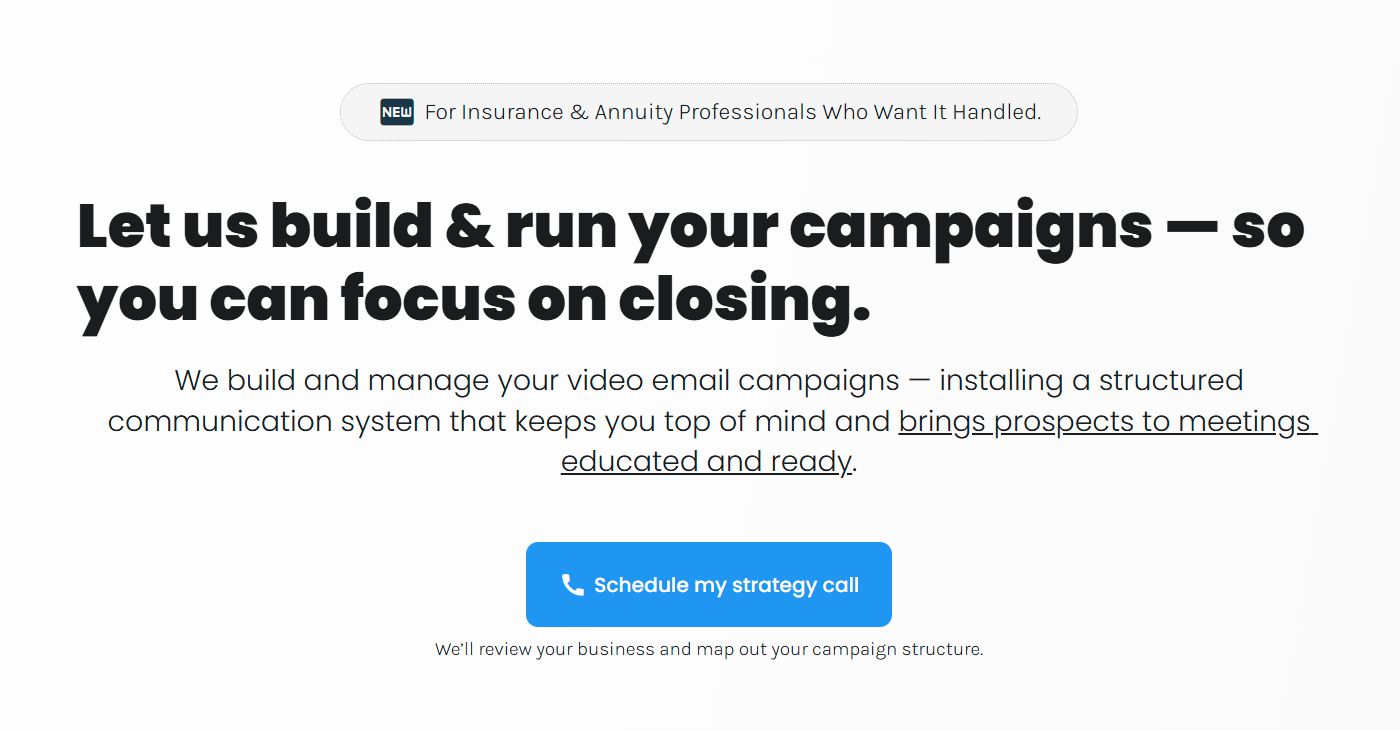
Compare that to most advisors' approach: manually sending emails whenever they remember, posting on social media sporadically, creating content from scratch each time.
One is scalable. The other isn't.
Tools and Technology That Actually Help
You don't need a massive tech stack. You need the right tools used consistently.
Email Marketing Platform
Minimum requirements:
- Tagging and segmentation
- Automation sequences
- Link tracking
- Integration with your CRM
Options: Mailchimp, ConvertKit, ActiveCampaign, HubSpot. Pick one and learn it deeply.
CRM with Pipeline Management
You need to know:
- Where each prospect is in your process
- When you last contacted them
- What content they've engaged with
- Next scheduled action
If your CRM can't tell you these four things instantly, you've got the wrong CRM.
Video Hosting and Delivery
Don't just upload videos to YouTube and hope prospects find them. You need videos you can send directly to prospects at specific moments in the conversation.
Requirements:
- Embed capability
- Tracking (who watched, how much)
- Professional appearance
- Easy to send and share
Scheduling Tool
For the love of all that is holy, stop playing email tag to schedule meetings.
Use Calendly, ScheduleOnce, or similar. Let prospects book directly into your calendar.
This alone will increase your booking rate by 30-40%.
Hiring Help vs. DIY (The Real Math)
Should you hire a marketing agency?
Depends. Let's do the math.
Agency approach:
- Cost: $2,000-5,000/month
- What you get: Content creation, social media management, maybe some ads
- Time investment from you: 2-4 hours/month for direction and review
- Results: Variable (often focused on metrics that don't drive revenue)
DIY approach:
- Cost: $200-500/month (tools and platforms)
- What you get: Whatever you build
- Time investment: 10-15 hours/month
- Results: Directly tied to your effort
Hybrid approach (the smart money):
- Cost: $600-2,000/month
- What you get: Tools, templates, and frameworks you execute
- Time investment: 5-8 hours/month
- Results: You maintain control, but leverage proven systems
Most advisors should start DIY with good tools, then hire execution help once they know what works.
Don't hire an agency to "figure out your marketing." Figure it out yourself, then hire someone to scale what's working.
Frequently Asked Questions
How long does it take to see results from financial advisor marketing?
Realistic timeline: 30-90 days for first measurable results. You'll see engagement earlier (email opens, video views, website traffic), but actual booked meetings typically start appearing in month three or four. This isn't because the marketing is slow-it's because your prospects need time to trust you and educate themselves before they're ready to talk. Don't expect overnight results. Build systems that compound over time.
What's the minimum budget needed for effective financial advisor marketing?
You can start with $250/month if you're willing to do the work yourself. That covers email platform ($50-100), video hosting ($20-50), scheduling tool ($15), and some budget for content tools or stock images. Add another $500-1,000 if you want to test paid traffic (LinkedIn ads, Google Ads). The bigger investment is time-expect to spend 8-12 hours monthly on content creation and campaign management until you systematize it.
Should I focus on social media or email for financial advisor marketing?
Email first, always. You own your email list. Social platforms can change algorithms or policies tomorrow and kill your reach. Use social media (particularly LinkedIn) for credibility and initial awareness, but drive everyone to email where you can nurture them systematically. The most successful advisors use social to attract attention, then convert that attention to email subscribers who they can engage consistently.
How do I market financial services without triggering compliance issues?
Focus on education, not promises. Explain concepts, not projected returns. Use case studies with real numbers but include proper disclaimers. Avoid superlatives ("best," "guaranteed," "always") unless they're literally true and compliant. Have someone review your marketing materials before publication-whether that's your compliance officer, broker-dealer, or a compliance consultant. When in doubt, teach rather than sell. Educational content that helps prospects understand their options is almost always compliant.
What type of content converts best for financial advisors?
Short-form video (3-5 minutes) explaining specific concepts performs exceptionally well. Detailed case studies with real numbers resonate with serious prospects. Comparison guides ("X vs. Y for your situation") help people in the consideration stage. Interactive tools like retirement calculators or risk assessments generate high-quality leads. The common thread: specificity. Generic content ("Tips for retirement planning") gets ignored. Specific content ("How SECURE 2.0 affects inherited IRAs for non-spouse beneficiaries") attracts exactly the prospects you want.
Financial advisor marketing doesn't have to feel like an endless grind of content creation with nothing to show for it. When you build systems around education, use structured frameworks that mirror how you actually work with clients, and focus relentlessly on metrics that matter-booked meetings, not vanity numbers-marketing becomes predictable instead of mysterious. If you're ready to stop guessing and start implementing proven campaigns designed specifically for insurance agents and financial advisors, WebPrez gives you the video library, templates, and Smart Money System framework to turn prospects into scheduled conversations without starting from scratch every time.
Related posts
Related posts
[Block//Post Date %M j, Y%+0]
[Block//Headline]
[Block//Short Post Description ##ellipsis(150)]




Connect With Us


