

by
May 13, 2026
Video Marketing for Financial Advisors: A System That Actually Gets Used
Most advisors try video once, feel awkward, and go back to doing what makes them money. That's not a willingness problem — it's a systems problem.
Michael Viñal
0
11 minute read
You've probably heard that video is "the future" of marketing. That advice is about fifteen years late. The question now isn't whether you should use video marketing for financial advisors, but how to do it without turning into a full-time content producer. Most advisors I talk to have tried recording something once or twice, felt awkward, posted it nowhere, and went back to doing what actually makes them money: talking to people. That's not a failure of willingness. It's a failure of systems.
The advisors who get results from video aren't necessarily more charismatic or tech-savvy. They've just built a repeatable process that solves a specific problem in their client acquisition or education workflow. This article is about building that process.
Why Video Marketing for Financial Advisors Actually Works
Let's address the obvious: you're not going to "go viral" explaining the SECURE 2.0 Act. That's not the point.
Video works in financial services because it solves the trust problem earlier in the relationship. When a prospect receives a two-minute video from you explaining how annuity riders work, they're not just learning about riders. They're calibrating whether you sound like someone who can explain things without jargon, whether you seem patient, and whether they can imagine sitting across from you for an hour.
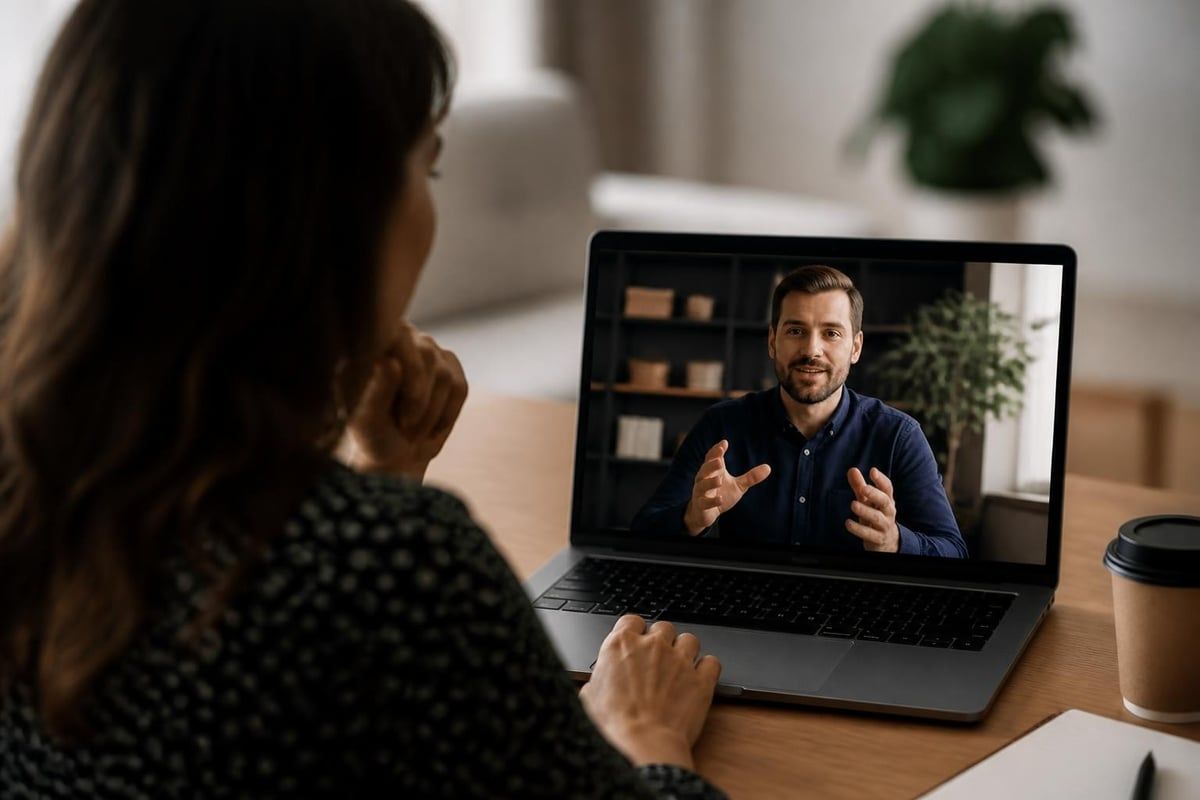
That calibration used to happen only in face-to-face meetings. Now it happens asynchronously, which means you can educate fifty people in the time it used to take to meet with five.
The Economics of Attention
Here's the math that matters: your prospects are confused, not stupid. They don't understand the difference between a SPIA and a FIA. They don't know whether they need permanent or term life insurance. And they're not going to read a twelve-page whitepaper to find out.
A well-structured video does three things simultaneously:
- Educates on a specific concept without requiring a meeting
- Qualifies the prospect by revealing whether they're actually interested
- Positions you as the person who can explain the complicated stuff simply
This is why video marketing has become essential for financial advisors looking to differentiate themselves in crowded markets. You're not competing on product anymore. You're competing on clarity.
What to Actually Record (And What to Skip)
Most advisors waste their first ten videos on content nobody asked for. They record a market update, a welcome message, or a generic "why work with me" video that could apply to any advisor in North America.
Start with the questions you answer three times a week. If you're constantly explaining what happens to an annuity when someone dies, record that explanation once. If prospects always ask about RMDs, record that. If the difference between indexed and variable confuses people, record that.
The Content Categories That Move Conversations Forward
| Content Type | Use Case | Typical Length |
|---|---|---|
| Concept explainer | Sent before or after discovery to clarify a specific topic | 2-3 minutes |
| Product overview | Introduces a strategy or solution without selling | 3-5 minutes |
| Process walkthrough | Shows what working together actually looks like | 4-6 minutes |
| Objection handler | Addresses common hesitations (fees, complexity, timing) | 2-4 minutes |
You don't need dozens of videos to start. You need six to eight that map to your existing sales process. Think about the handoffs: discovery to fact-finding, fact-finding to presentation, presentation to implementation. Where do people get stuck or confused? That's where video goes.
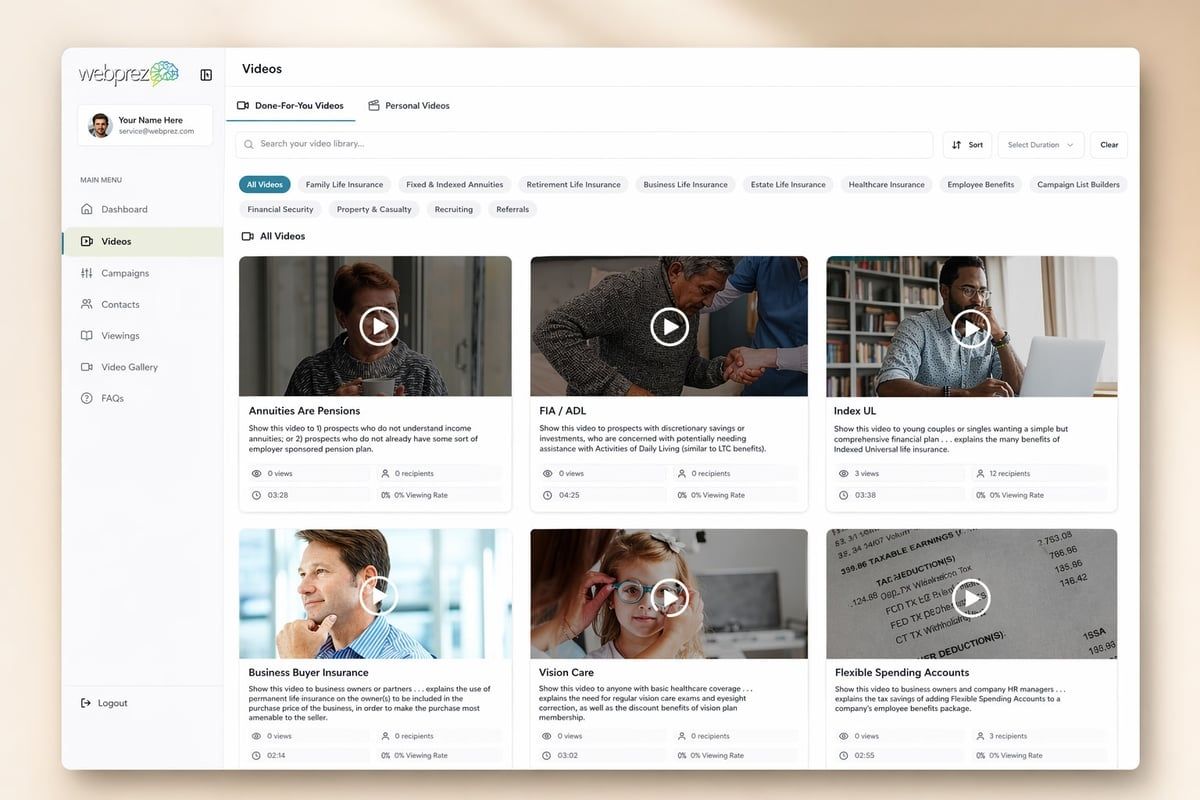
The WebPrez Video Library was built specifically around these moments. Instead of recording everything yourself, you can pull from a curated set of short-form videos designed to start conversations, not close them.
Recording Without Looking Like a Hostage Video
You don't need a studio. You need decent lighting, a quiet room, and a decision about whether you're going to use a script or bullet points.
Here's what works:
- Natural light from a window beats a ring light you don't know how to use
- Wired headphones as a mic beats your laptop's built-in microphone
- Three bullet points beats a script you'll read like a ransom note
Record standing up. You'll have more energy. Look at the camera, not the screen. Pretend you're talking to one person, not an audience. If you mess up, pause for two seconds and start that sentence again. You can cut the mistake in editing.
And for the love of compound interest, keep it short. A five-minute video that says one thing clearly is infinitely better than a twelve-minute video that says three things poorly. Most financial advisor video marketing strategies recommend keeping educational content under five minutes for optimal engagement.
Building a Video System That Doesn't Require a Film Degree
The difference between dabbling in video and actually using it as a tool is systems. You need to know exactly when a video gets sent, to whom, and what happens next.
Let's walk through a basic structure you can implement this week.
The Pre-Meeting Education Sequence
You book a discovery meeting. Great. Now what?
Most advisors send a calendar confirmation and hope the prospect shows up. Better advisors send a short video the day before that says: "Here's what we'll cover tomorrow, here's what to bring, and here's what you can expect."
Even better: send a concept video three days before the meeting that educates them on the topic you'll discuss. If the meeting is about retirement income, send a two-minute explainer on the three sources of retirement income and how they work together.
Why this works: The prospect shows up already halfway educated. Your meeting time gets spent on their specific situation, not on teaching basic concepts. You look organized and thoughtful. And if they don't watch the video, you've learned something about their level of engagement.
- Confirmation - calendar invite with meeting logistics
- Day 3 before - educational video on the topic you'll discuss
- Day 1 before - expectations video (what to bring, what you'll cover)
- Day of - text reminder with video link for easy access
The Post-Meeting Follow-Up Sequence
The meeting went well. They need to think about it. They'll call you next week. (They won't.)
This is where most advisors lose momentum. Instead of hoping they remember what you discussed, send a video recap within 24 hours. It doesn't need to be fancy. Record yourself summarizing the three key points you discussed, the next steps, and the timeline.
Then follow up three days later with a video that addresses the most common objection you didn't talk about in the meeting. If it's about fees, send a fee explanation video. If it's about market risk, send that.
You're educating, not selling.
Compliance Considerations (Because You're Not a YouTuber)
Let me be direct: you can't just say whatever you want on camera and call it marketing. You know this. But a lot of advisors freeze up entirely because they're terrified of compliance violations, so they never record anything at all.
Here's the framework that keeps you out of trouble.
What You Can and Cannot Say
Generally safe:
- Educational content about how products work
- Process explanations (how you work with clients)
- Definitions and concept clarifications
- Your credentials and experience
Requires review:
- Anything mentioning specific returns or performance
- Comparisons between product types
- Client testimonials (even vague ones)
- Statements about tax benefits without disclaimers
Never without legal review:
- Guarantees about outcomes
- Predictions about market performance
- Client results or case studies
- Anything that could be construed as advice without context
The safest approach is to stick to educational content that explains concepts without recommending specific actions. Your video should create the conditions for a conversation, not replace the need for one.
Distribution: Where Your Videos Actually Go
Recording the video is half the work. Getting it in front of the right people is the other half.
Most advisors upload to YouTube, post on LinkedIn once, and then wonder why nothing happens. That's not distribution. That's hope.
Email Remains Your Best Distribution Channel
Your email list is the most valuable asset you have. These are people who already know you, have expressed interest, or are current clients. When you send them a video, they'll actually watch it.
Here's a simple framework:
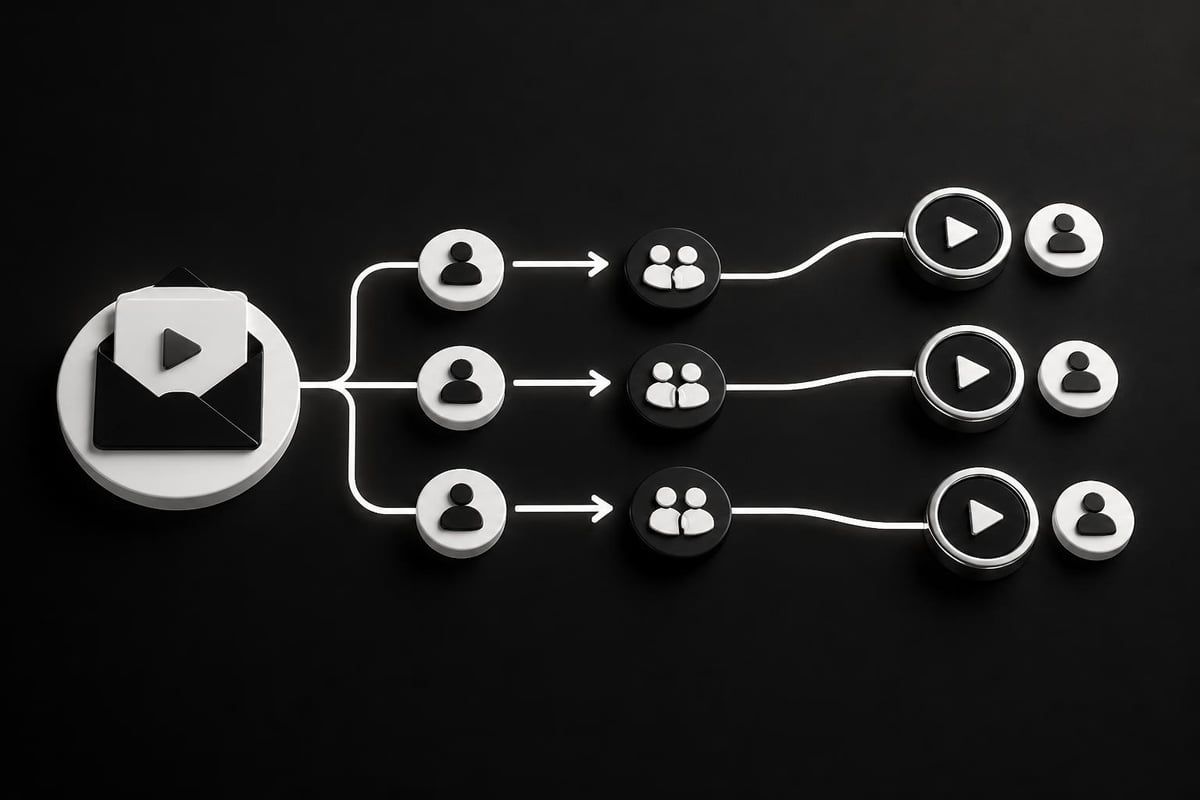
- Weekly education email with one video on a single topic
- Campaign sequences for specific situations (new retirees, business owners, inherited IRA recipients)
- Personal sends to individual prospects as part of your follow-up process
The key is context. Don't just drop a video link and hope for the best. Write two sentences explaining why you're sending it and what they'll learn. Make it personal. Make it relevant.
LinkedIn for Visibility, Not Virality
Post your videos on LinkedIn, but adjust your expectations. You're not trying to get 10,000 views. You're trying to stay visible to the 300 people in your network who might need your help someday.
Post consistently (once or twice a week), write a short caption that frames the problem the video solves, and tag it appropriately. That's it. Don't stress about the algorithm. Don't buy engagement. Just show up consistently with useful content.
One advisor I know posts every Thursday morning at 8 AM. Same time, same format, same pattern. His videos average 200-400 views. But three of his last five clients came from LinkedIn connections who'd been watching for months. Consistency beats creativity.
Your Website as the Video Hub
Every video you create should live on your website in an organized library. Not buried in a blog post from 2023. Not scattered across random pages. In one place, organized by topic.
Why? Because when someone's considering working with you, they'll visit your website and poke around. If they find a library of helpful videos on exactly the topics they're confused about, you've just differentiated yourself from the ninety percent of advisors whose websites are digital brochures.
Build a simple resources page with categories:
- Retirement planning
- Insurance strategies
- Estate planning
- Tax considerations
- Investment concepts
Drop your videos into the relevant buckets. Update it monthly. Link to it in your email signature.
The Smart Money System Approach to Video
Here's where most video marketing for financial advisors falls apart: there's no connection between the video and the actual advisory process. The video exists in isolation. It educates, maybe, but it doesn't move the relationship forward.
The Smart Money System fixes this by structuring video around three specific phases: Discovery, Snapshot, and Blueprint.
Discovery: Using Video to Start the Conversation
Before you ever meet a prospect, they're trying to figure out whether you're worth their time. A discovery video explains how you work, what makes you different, and what the first conversation will cover. It sets expectations and reduces friction.
But discovery isn't just about you. It's about them. The Smart Money Discovery tool uses an AI-powered questionnaire to generate a personalized financial snapshot that surfaces gaps and priorities. You can send a short video explaining how the tool works and why it's useful, making the ask feel less like homework and more like a useful first step.
Snapshot: Video as a Teaching Tool
After discovery, most advisors jump straight into product recommendations. The Snapshot phase is about showing the prospect where they stand today before talking about where they could be tomorrow.
A video here might explain the three biggest gaps you identified in their current plan. You're not selling yet. You're diagnosing. And because it's on video, they can watch it twice, share it with a spouse, and come back with better questions.
Blueprint: Turning Complexity Into Clarity
The Blueprint phase is where you present the strategy. This is not the place for a video (that's a real conversation), but it is the place for follow-up videos that reinforce what you discussed.
Record a short video after the blueprint meeting summarizing the strategy, the timeline, and the next steps. Send it that evening while the conversation is still fresh. It acts as a written summary without requiring you to write anything.
Measuring What Actually Matters
You don't need Google Analytics and heatmaps. You need to know three things:
- Are people watching? (Open rates, view duration)
- Are they engaging? (Replies, questions, meeting requests)
- Are they converting? (Meetings booked, policies issued)
Most email platforms will tell you if someone opened a video email and how long they watched. If they watched more than 50%, they were interested. If they watched less than 20%, your subject line or intro was off.
Track reply rates. If you send a video to twenty prospects and get three replies asking questions, that's a 15% engagement rate. That's very good. If you get zero, your video either wasn't relevant or wasn't clear.
And ultimately, track closed business. How many clients in the last quarter came through a process that involved video? You don't need attribution software. Just ask them: "By the way, did the videos I sent help clarify anything for you?" Their answer tells you everything.
| Metric | What It Tells You | Target Benchmark |
|---|---|---|
| Email open rate | Whether your subject line worked | 25-35% for warm lists |
| Video watch rate | Whether the content matched expectations | 50-70% completion |
| Reply rate | Whether the video prompted engagement | 10-20% for targeted sends |
| Meeting conversion | Whether video moved the sales process forward | Track year-over-year change |
Common Mistakes (And How to Avoid Them)
Let's address the things that waste time and credibility.
Mistake 1: Trying to be someone you're not. If you're not naturally energetic and enthusiastic, don't force it. Be yourself. Prospects can smell fake from a mile away. Authenticity beats production value every time.
Mistake 2: Making videos too long. Anything over six minutes better be exceptionally valuable. Most topics you need to cover can be handled in three minutes or less. Respect people's time.
Mistake 3: No clear next step. Every video should end with a simple instruction: "If this applies to you, reply to this email," or "Click the link below to schedule a call," or "Watch part two where I cover the tax implications." Don't leave people wondering what to do next.
Mistake 4: Inconsistency. Recording five videos in one week and then going dark for three months trains your audience not to expect anything from you. Pick a frequency you can sustain and stick to it. Once a week is plenty.
Mistake 5: Overproducing. You don't need motion graphics, background music, and professional color grading. You need clear audio, decent lighting, and useful information. The content matters more than the polish.
FAQ
How long should my financial advisor marketing videos be?
Two to four minutes for educational content. Shorter for simple concepts, longer for complex strategies. If you're going over six minutes, you're either rambling or trying to cover too much in one video. Break it into a series.
Do I need to show my face on camera?
It helps, but it's not a requirement to start. The goal is clarity and credibility — and a well-structured voiceover walkthrough of a concept can deliver both. That said, if you're using pre-built videos from a library like WebPrez, this question largely disappears. The educational content is already produced. Your face shows up where it matters most: in the actual client conversation.
How often should I post videos?
Quality beats frequency. One well-targeted video per week sent to the right people will outperform daily posts sent to everyone. Start with weekly. Increase only when you've built the systems to support it without sacrificing quality.
What equipment do I actually need?
A smartphone with a decent camera, a quiet room with natural light, and wired earbuds for better audio. That's it. You can upgrade to a dedicated microphone and ring light later if you want, but start simple. The biggest barrier isn't equipment-it's consistency.
How do I handle compliance review for videos?
Establish a clear process with your compliance team before you record anything. Get their guidelines in writing. Stick to educational content that explains concepts without making recommendations. Avoid performance claims, guarantees, and specific product endorsements. When in doubt, get it reviewed.
Video marketing for financial advisors works when it's part of a system, not a random tactic. Record the explanations you're already giving in meetings. Send them at the right moment in your sales process. Measure what happens next. That's the entire playbook. If you want a done-for-you video library, pre-built campaigns, and a framework that connects all of this to actual client conversations, WebPrez gives you the infrastructure without requiring you to become a content producer. Start with the videos. Build the system around them. The results follow.
Related posts
Related posts
[Block//Post Date %M j, Y%+0]
[Block//Headline]
[Block//Short Post Description ##ellipsis(150)]




Connect With Us


