You already know the old playbook doesn't work anymore. Cold calling feels like pushing a boulder uphill. Seminars are expensive and unpredictable. Buying leads puts you in a race to the bottom with every other advisor who got the same list.
Here's the uncomfortable truth: most advisors don't have a financial advisor marketing strategy. They have a collection of random tactics they run when business slows down. Then they wonder why their pipeline feels like a roller coaster.
A real strategy isn't a list of things to try. It's a system that predictably moves people from "I don't know you" to "I trust you with my retirement." That's what we're building here.
Why Most Financial Advisor Marketing Strategies Fail
Let's start with what doesn't work, because you've probably already wasted money on it.
The biggest mistake? Treating marketing like an event instead of a process. You run an ad campaign for two months, get lukewarm results, then abandon it. You post on LinkedIn for three weeks, hear crickets, and give up. You send one email to your database and call it "staying in touch."
None of that is a financial advisor marketing strategy. That's just noise.
Here's what actually kills marketing efforts:
- No clear target market - You're trying to help "everyone who needs financial planning," which means you're not compelling to anyone specific
- Pitching products instead of solving problems - Your website talks about annuities and life insurance, not about the actual fears keeping prospects awake at 3 AM
- No follow-up system - Someone downloads your guide or attends your webinar, then falls into a black hole because you don't have a structured next step
- Compliance paralysis - You're so worried about what you can't say that you end up saying nothing at all
The pattern is always the same. Advisors focus on the acquisition moment (the seminar, the ad, the networking event) without building the infrastructure to nurture, educate, and convert over time.
According to developing a comprehensive financial advisor marketing plan, successful strategies require clear positioning, defined target markets, and systematic follow-up processes that most advisors simply don't implement.
The Real Purpose of Marketing
Marketing isn't about convincing strangers to trust you with their life savings in one conversation. That's sales pressure disguised as strategy.
Marketing's job is simpler: get the right people to raise their hand, then educate them until they're ready to have a real conversation. Your financial advisor marketing strategy should create a predictable flow of educated, pre-qualified prospects who already understand what you do and why it matters.
Think of it like a filtering system. Top of the funnel: lots of people who might need help. Middle of the funnel: fewer people who understand their problem and your approach. Bottom of the funnel: qualified prospects ready to take action.

Building Your Financial Advisor Marketing Strategy Framework
Every effective financial advisor marketing strategy has three non-negotiable components. Miss any one of them, and you're back to hoping and praying.
Component 1: A Clear Niche Position
You can't build momentum when you're marketing to everyone. Specificity creates credibility.
This doesn't mean you turn away business from people outside your niche. It means your marketing speaks directly to one group with one set of problems. Here's why it works:
Benefits of niche positioning:
- Your messaging becomes instantly more relevant and compelling
- Referrals are easier because people know exactly who to send you
- Content creation gets simpler because you're solving the same problems repeatedly
- Compliance becomes more manageable when you're not trying to cover every possible scenario
Real examples: "I help business owners exit their companies without destroying their retirement plan." Or: "I specialize in federal employees navigating TSP, FERS, and survivor benefits."
Notice how those positions immediately tell you who they serve and what problem they solve? That's the difference between positioning and generic advisor-speak.
The research on attracting high-net-worth clients confirms this approach: advisors who develop deep expertise in specific market segments consistently outperform generalists.
Component 2: An Education-First Campaign System
Here's where most strategies fall apart. Advisors know they need to "provide value" and "build trust," but they don't have a structured way to do it.
An education campaign isn't a blog post you write once and forget. It's a repeatable sequence that moves people through specific stages of awareness.
| Campaign Stage | Prospect Question | Your Content Answer | Delivery Method |
|---|
| Awareness | "Do I even have this problem?" | Educational content identifying the issue | Social posts, ads, videos |
| Consideration | "What are my options?" | Comparison content and frameworks | Email sequences, guides |
| Decision | "Is this advisor right for me?" | Case studies, process overview | Direct outreach, consultations |
The key word is sequence. One piece of content doesn't educate anyone. A structured campaign that delivers the right information in the right order actually moves the needle.
You need templates, frameworks, and pre-built sequences you can deploy consistently. Building from scratch every time guarantees you'll quit after two months.
For advisors looking to standardize this process, exploring strategic content marketing frameworks can provide valuable structure for creating repeatable education systems.
Component 3: A Documented Follow-Up Process
This is the difference between a hobby and a business.
When someone engages with your content, downloads your guide, or attends your event, what happens next? If the answer is "I try to remember to reach out," you don't have a system.
Your follow-up process should answer:
- Who gets contacted and when?
- What's the message in each touchpoint?
- What's the goal of each interaction?
- When do you stop following up?
Most prospects need 7-12 touchpoints before they're ready to schedule. Not because they're difficult, but because they're busy and distracted. Your system needs to persist without you remembering to do it manually.
This is where client education platforms become essential infrastructure, not nice-to-have tools. You need the ability to send the right video, guide, or message at the right time without manually crafting each one.
The Smart Money System Approach
Let's get tactical. You need a framework that works regardless of your niche or preferred marketing channel.
The most effective financial advisor marketing strategy follows a three-step conversation architecture: Discovery → Snapshot → Blueprint. This isn't just messaging, it's the actual structure of how you move someone from stranger to client.
Discovery: Finding the Gap
The first conversation isn't about your solutions. It's about understanding their current situation and uncovering gaps they might not even know exist.
Most advisors ask surface-level questions and wonder why prospects don't engage. "How much do you have saved for retirement?" is a data question. "What happens to your spouse's income if you pass away next year?" is a discovery question.
Discovery uncovers:
- Hidden vulnerabilities they haven't addressed
- Misalignment between their goals and their current plan
- Emotional drivers beyond the spreadsheet
- Urgency factors that motivate action
The breakthrough happens when prospects realize they have a problem worth solving. Until that moment occurs, your expertise is irrelevant.
Tools like WebPrez's Smart Money Discovery automate this process by asking the right questions upfront and generating a personalized snapshot that reveals gaps without the advisor having to play investigator.
Snapshot: Visualizing Their Current State
Once you've identified gaps, the next step is showing prospects what their financial picture actually looks like right now. Not judgment, just reality.
This is where client education becomes powerful. Instead of telling someone they're underinsured or over-concentrated in one asset, you show them a clear visualization of their current situation compared to where they need to be.
The snapshot stage builds urgency without pressure. When prospects see their own numbers reflected back in a way that makes sense, they self-identify the problem. You're not selling, you're facilitating clarity.

Blueprint: Mapping the Solution
The final stage is showing the path forward. Not a 40-page financial plan they'll never read. A clear, visual blueprint that connects their current reality to their desired outcome.
This is where your expertise shines. You're not pitching products, you're mapping solutions to the specific gaps uncovered in discovery and highlighted in the snapshot.
Your blueprint should include:
- Specific action steps prioritized by urgency
- Timeline for implementation
- Expected outcomes for each recommendation
- Clear next steps to get started
When the blueprint directly addresses gaps they've already acknowledged, closing becomes a natural next step rather than a persuasion battle.
Channel Strategy: Where to Actually Spend Your Time
You can't be everywhere at once. Your financial advisor marketing strategy needs to focus on channels that actually produce results for advisors, not generic marketing advice written for SaaS companies.
Email Marketing for Advisors
Email isn't dead. Boring email is dead.
Your database is the most valuable marketing asset you own. These are people who already know you, have engaged with you in the past, or were referred by someone they trust. Ignoring them is leaving money on the table.
Effective email marketing for advisors:
- Send consistently (weekly or biweekly minimum)
- Lead with education, not promotion
- Include video content to increase engagement
- Segment by interest or life stage when possible
- Always include a clear next step
The biggest mistake? Sending one email per quarter with generic market commentary. That's not staying in touch, that's training people to ignore you.
A strong financial advisor content strategy prioritizes email as the primary channel for nurturing prospects and maintaining client relationships over time.
Video Content That Converts
Video does three things text can't: builds trust faster, explains complex concepts clearly, and scales your expertise beyond one-to-one conversations.
The problem is most advisors don't have time to create videos, don't know what to say, and worry about compliance. So they do nothing.
The solution isn't becoming a YouTube creator. It's leveraging pre-built, compliance-aware video content you can send to prospects and clients at the right moments in their journey.
| Use Case | Video Topic | When to Send |
|---|
| Early awareness | "Three retirement risks most people ignore" | After initial inquiry |
| Middle of funnel | "How indexed annuities actually work" | When discussing income solutions |
| Pre-appointment | "What to expect in your first meeting" | Day before scheduled call |
| Post-sale | "Next steps after purchasing coverage" | Immediately after application |
Video lets you have the same conversation with 100 prospects simultaneously. That's leverage.
LinkedIn for Relationship Building
LinkedIn isn't about posting motivational quotes or resharing market news. It's about demonstrating expertise and staying visible to your network.
Your financial advisor marketing strategy on LinkedIn should focus on two activities: publishing educational content and engaging with prospects' posts.
LinkedIn tactics that work:
- Share one educational post per week addressing a specific question you hear repeatedly
- Comment meaningfully on posts from prospects, clients, and COIs (not just "Great post!")
- Send personalized connection requests to warm introductions, not cold outreach spam
- Use LinkedIn messaging for follow-up, not cold pitching
The goal is visibility and credibility, not viral posts. When someone in your network needs financial advice, they should think of you first because you've been consistently helpful.
Research shows that referral-based growth strategies significantly outperform traditional marketing tactics, and LinkedIn provides the perfect environment for nurturing those relationships digitally.
Client Events (Done Right)
Seminars aren't dead, but the spray-and-pray model is. Renting a hotel ballroom and hoping strangers show up for a steak dinner no longer delivers ROI in most markets.
What works: smaller, highly targeted events for specific audiences with a clear educational focus.
Instead of "Retirement Planning 101," try "Tax Strategies for Business Owners Selling in the Next 3 Years." Instead of inviting 200 strangers, invite 20 qualified prospects from your target niche.
The event itself is just one touchpoint. Your financial advisor marketing strategy should include pre-event education (videos, guides, emails), the event experience itself, and a structured post-event follow-up sequence.

Campaign Templates You Can Actually Use
Theory is useless without execution. Here are three campaign frameworks you can deploy immediately.
Campaign 1: The Gap Identifier
Objective: Surface a hidden problem prospects didn't know they had
Target audience: Business owners age 45-60
Sequence:
- Week 1: Social post asking "What's your business worth if you had to sell next month?"
- Week 2: Email with video explaining business valuation gaps
- Week 3: Offer free business continuity assessment
- Week 4-8: Educational drip sequence on exit planning strategies
- Week 9: Direct invitation to schedule planning conversation
Key concept: You're not selling life insurance or buy-sell agreements yet. You're educating them about a problem (business continuity risk) they haven't addressed. Solutions come later.
Campaign 2: The Life Transition Play
Objective: Reach people during major life changes when they're actively seeking guidance
Target audience: Recent retirees or people within 2 years of retirement
Sequence:
- Touchpoint 1: LinkedIn article on "Five Financial Mistakes New Retirees Make in Year One"
- Touchpoint 2: Video series on income planning, healthcare, and Social Security timing
- Touchpoint 3: Downloadable retirement income checklist
- Touchpoint 4: Invitation to retirement income workshop (virtual or in-person)
- Touchpoint 5-10: Post-workshop email sequence with case studies and next steps
Key concept: You're meeting them at a moment of high intent. They're already looking for help. Your job is to demonstrate you understand their specific transition.
Campaign 3: The Referral Accelerator
Objective: Generate warm introductions from existing clients and COIs
Target audience: Current clients who've been with you 2+ years
Sequence:
- Month 1: Send client appreciation video thanking them for their trust
- Month 1: Include short educational video they can forward to friends facing similar situations
- Month 2: Send case study (anonymized) showing outcome you helped another client achieve
- Month 2: Ask: "Do you know anyone facing [specific situation]?"
- Month 3: Provide referral-specific content they can share directly
Key concept: You're making it easy for clients to introduce you by giving them shareable content that doesn't feel like an ad. The goal is warm introductions, not cold referrals.
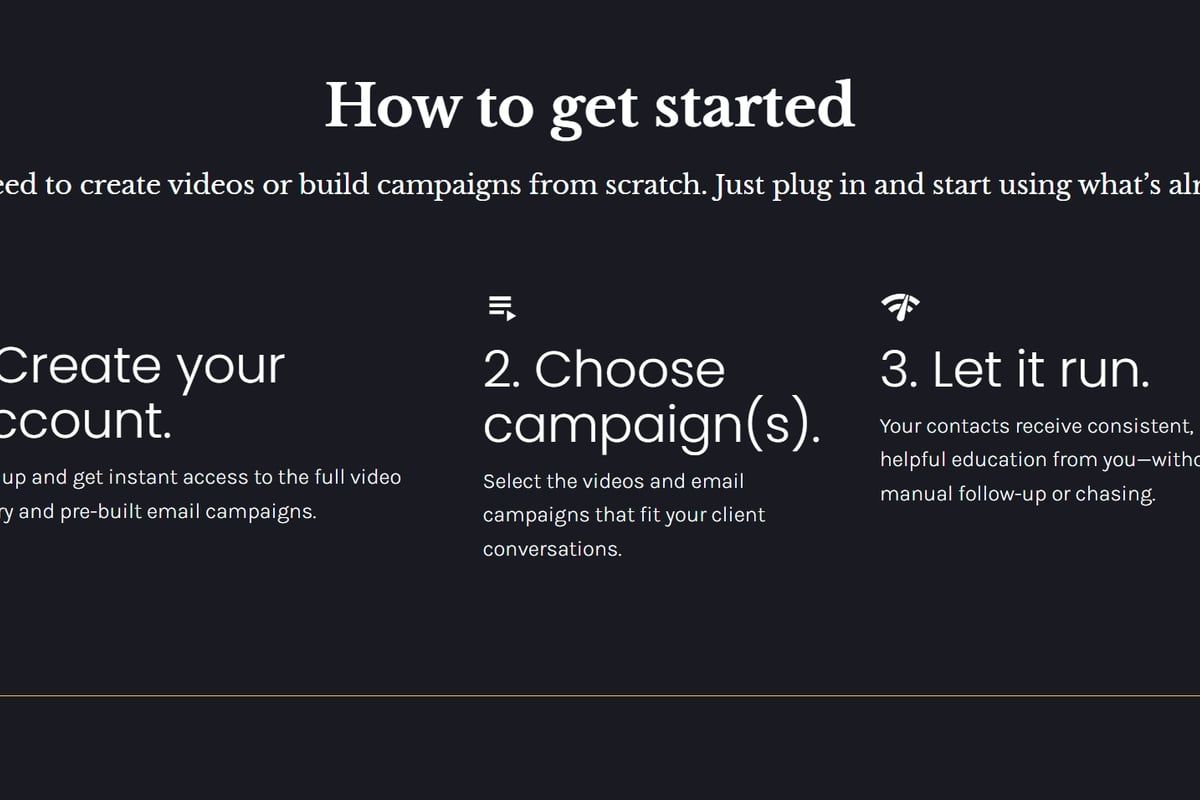
Standardizing these campaigns becomes significantly easier when you have access to pre-built templates and compliance-reviewed content. The WebPrez Essentials Plan provides exactly this infrastructure, giving advisors campaign templates and a curated video library designed for the insurance and annuity market.
Measuring What Actually Matters
You can't optimize what you don't measure. But most advisors track vanity metrics that don't correlate with revenue.
Likes, impressions, and website visitors are interesting. They're not actionable. Your financial advisor marketing strategy should focus on conversion metrics at each stage of your funnel.
Metrics by Funnel Stage
Top of Funnel (Awareness):
- New inquiries per month
- Cost per lead
- Source attribution (where leads came from)
Middle of Funnel (Consideration):
- Email open rates on educational sequences
- Video completion rates
- Guide/resource downloads
Bottom of Funnel (Decision):
- Appointment booking rate
- Show-up rate for scheduled appointments
- Conversion rate from appointment to client
The most important number? Appointments per month from marketing. Everything else is a leading indicator of that metric.
If you're generating consistent appointments from your campaigns, your strategy is working. If not, something in the sequence is broken.
Budget Allocation
How much should you spend? The standard answer is 5-10% of revenue, but that's too broad to be useful.
More important than the percentage is the allocation across channels. According to financial advisor marketing budget research, successful advisors distribute spending based on what's actually producing appointments, not what sounds impressive.
Sample allocation for a $500K producer:
| Category | Monthly Budget | Purpose |
|---|
| Content creation/platform | $197-597 | Video library, campaign templates, education tools |
| Paid advertising | $500-1000 | Facebook/LinkedIn ads to target niche |
| Events | $300-500 | Quarterly targeted workshops |
| Website/SEO | $200-400 | Maintaining professional presence |
| CRM/automation | $100-200 | Managing follow-up systematically |
Notice what's not on that list: buying leads. When you have a systematic financial advisor marketing strategy, you generate your own leads instead of renting someone else's.
Compliance-Aware Marketing That Still Works
Let's address the elephant in the room. You're not a tech startup. You can't just say whatever you want in your marketing.
But compliance doesn't mean boring. It means strategic. The advisors who complain most about compliance are usually the ones trying to make performance claims or promise outcomes. Don't do that.
Compliance-friendly content focuses on:
- Education about concepts, not pitches for products
- Process and methodology, not guaranteed results
- Questions that provoke thinking, not fear-mongering
- Client situations (anonymized), not testimonials
When you explain how something works rather than promising what it will do, you stay on the right side of regulations while still providing value.
Most broker-dealers and RIAs have oversight processes for marketing materials. Work with them, not against them. Submit your campaign templates for approval once, then deploy repeatedly.
The smartest advisors use pre-approved content libraries that eliminate the compliance guesswork on every piece of marketing they send. That's not limiting, it's liberating.
If you're navigating these challenges, understanding the upper limit problems advisors face can help you identify what's really holding you back versus what's a compliance excuse.
Automation Without Losing the Personal Touch
Here's the paradox: you need systems and automation to scale, but your prospects want to feel like you're talking directly to them.
The solution isn't choosing between scalability and personalization. It's building systems that deliver personalized experiences automatically.
What to automate:
- Initial follow-up after someone downloads a resource
- Educational email sequences based on interest
- Video delivery at specific points in the journey
- Appointment reminders and pre-meeting preparation
- Post-appointment thank you and next steps
What to keep personal:
- Responses to direct questions
- Appointment conversations
- Client review meetings
- Referral requests
- Major life event acknowledgments
Think of automation as your infrastructure, not your personality. The campaigns run automatically. Your voice and expertise remain front and center.
A comprehensive marketing guide for advisors emphasizes this balance, showing how to integrate digital channels while maintaining the relationship-first approach clients expect.
FAQ
How long does it take to see results from a financial advisor marketing strategy?
Expect 90-120 days before you see meaningful appointment flow from new campaigns. The first month is setup and testing. The second month is refinement. The third month is when the system starts producing consistently. Advisors who quit after six weeks never see the compounding effect of consistent execution.
Should I hire a marketing agency or build campaigns myself?
It depends on your production level and available time. If you're doing under $300K in annual premium, you probably can't justify a full agency retainer. Start with campaign templates and pre-built content you deploy yourself. Above $500K, consider done-for-you execution if marketing tasks are keeping you from client-facing work. The key is having proven frameworks either way, not reinventing the wheel.
What's the best marketing channel for financial advisors in 2026?
There's no universal "best" channel. Email works exceptionally well for nurturing existing relationships. LinkedIn is ideal for B2B niches like business owners. Facebook and Google ads can work for consumer segments if targeted properly. The real answer: focus on one or two channels and execute them consistently rather than dabbling across six channels poorly.
How do I create content without violating compliance?
Focus on education, not promotion. Explain how financial concepts work rather than promising specific outcomes. Use questions to provoke thinking rather than making claims. Work with pre-approved content when possible. Submit campaign templates to your compliance department once for approval, then reuse them. The advisors who struggle most with compliance are trying to make performance claims that shouldn't be made anyway.
Can I build a financial advisor marketing strategy without spending money?
You can, but it will cost you time instead. Creating content from scratch, building campaigns manually, and managing follow-up without automation is possible but slow. Most advisors find that investing $200-600/month in infrastructure (content platforms, email systems, campaign templates) dramatically accelerates results while reducing workload. The ROI on systematic marketing infrastructure typically exceeds any other investment advisors make.
The advisors who win in 2026 aren't necessarily the smartest or most credentialed. They're the ones with repeatable systems that consistently move prospects from awareness to appointment. Your financial advisor marketing strategy doesn't need to be complicated, but it does need to be documented, systematic, and executed consistently. If you're ready to stop guessing and start building a predictable pipeline, WebPrez provides the campaign templates, video library, and Smart Money System framework that turn complex concepts into clear client conversations.