You already know the problem. A prospect fills out a form on your website, attends a webinar, or asks about indexed annuities at a networking event. You follow up once, maybe twice. Then life happens. A policy review runs long, someone's beneficiary designation needs fixing, and that warm lead from last week goes cold. Three months later, they buy from someone else.
Automated marketing for financial advisors isn't about replacing your handshake or your client conversations. It's about building a system that keeps those conversations alive when you're not physically sitting across the table. Think of it as a way to stay present in someone's inbox without being present in your office at 9 PM on a Thursday.
Why Manual Follow-Up Fails Most Advisors
Let's be honest: you're already stretched thin. Between compliance reviews, carrier appointments, and actual client work, adding "send educational email to 47 prospects" to your Tuesday afternoon is a fantasy.
Manual follow-up assumes you have perfect recall and unlimited discipline. You don't. Neither do I.
Here's what typically happens:
- You meet someone at a Chamber event who's interested in retirement income planning
- You send them a quick email the next day with your calendar link
- They don't book immediately
- You get busy with a case that's closing
- Two weeks pass
- You remember them, feel guilty, send another email
- It's awkward because now there's a gap
- They've moved on or forgotten the original context
Automated marketing for financial advisors solves the gap problem. It creates a structured system that continues the conversation whether you're in a client meeting, on vacation, or dealing with a compliance issue that's eating your afternoon.
The Difference Between Automation and Spam
Let me clear this up right now: automation doesn't mean blasting generic emails to everyone in your CRM. That's spam with a scheduling tool attached.
Real automation in this context means creating personalized, relevant sequences that deliver value based on where someone is in their journey with you. If someone downloaded your guide on annuity income riders, they shouldn't get emails about term life insurance next week. The sequence should match the interest they already expressed.

The best automated systems feel like you're personally thinking about each prospect. Because in a way, you are-you just did the thinking once when you built the sequence, instead of recreating it manually for every single person.
Core Components of Advisor Marketing Automation
Automated marketing for financial advisors isn't a single tool. It's a stack of connected systems working together. Here's what actually matters:
Email Sequences
This is the foundation. When someone enters your world-through a lead magnet, webinar registration, or website inquiry-they should immediately enter a sequence designed for their specific interest.
What makes a good sequence:
- Starts with immediate value delivery (the thing they signed up for)
- Follows with education that addresses common objections or questions
- Includes stories or case studies (anonymized, compliant) that show outcomes
- Ends with a clear, low-friction next step
A sequence for someone interested in fixed indexed annuities might look like this:
- Day 0: Deliver the guide they requested
- Day 2: Short email explaining how principal protection actually works
- Day 5:Video explaining the benefits of fixed indexed annuities products
- Day 8: Case story about a client who used an FIA for pension replacement
- Day 12: Calendar link with specific framing: "Let's see if this approach fits your situation"
Each email does one job. It doesn't try to close. It doesn't oversell. It educates and builds trust incrementally.
Video Library Integration
Text-based emails work, but video changes the game. AI-powered marketing for financial advisors has made it easier to create and deploy video content at scale, but the real value is in using video strategically within your automation.
Here's why video matters in automated sequences:
- It reintroduces your face and voice between in-person meetings
- Complex concepts (like annuity crediting strategies) are easier to explain visually
- Prospects can watch on their timeline, not yours
- Compliance teams can review once, approve for repeated use
When you embed a short educational video in email three of your sequence, you're not just sending information. You're creating a moment where the prospect remembers why they were interested in the first place. That's the difference between "another email from an advisor" and "oh right, this person actually explains things clearly."
Segmentation and Tagging
Not every prospect cares about the same thing. A 45-year-old small business owner thinking about key person insurance has different needs than a 62-year-old looking at income annuities.
Automation only works when it's relevant. That means tagging people based on:
- Product interest (life, annuities, LTC, business planning)
- Life stage (pre-retirement, in retirement, business owner, young family)
- Engagement level (opened last 3 emails vs. hasn't opened in 30 days)
- Source (webinar attendee, referral, website inquiry)
Your CRM or marketing platform should automatically apply tags based on actions people take. Clicked the annuity video? Tag them "annuity-interested." Opened three emails in a row? Tag them "engaged." This lets you send the right message to the right person without manually sorting your list every week.
Building Your First Automated Campaign
Let's get practical. You don't need a perfect system from day one. You need one working campaign that you can deploy this month.
Here's the step-by-step process I'd follow if I were starting from scratch:
Step 1: Pick One Audience and One Outcome
Don't try to automate everything at once. Pick your best prospect type-the people you actually want to work with and know how to serve.
Maybe it's pre-retirees worried about sequence of returns risk. Maybe it's business owners looking at executive bonus arrangements. Whatever it is, pick one.
Then define the outcome: what do you want them to do after going through your sequence? Usually, it's "schedule a discovery call" or "attend a workshop." Be specific.
Step 2: Create the Lead Magnet
You need something valuable enough that people will give you their email address. This could be:
- A one-page guide ("5 Questions to Ask Before Buying an Annuity")
- A calculator or worksheet ("Retirement Income Gap Estimator")
- A recorded webinar or video training
- A comparison chart (different annuity types, insurance riders, etc.)
The lead magnet should address one specific pain point and deliver immediate value. It's not a sales pitch. It's education that positions you as someone who actually understands their situation.
Step 3: Map the 5-Email Sequence
Once someone downloads your lead magnet, they enter a sequence. Five emails over two weeks is a good starting point.
| Email | Timing | Purpose | Content Type |
|---|
| 1 | Immediate | Deliver lead magnet | PDF + welcome |
| 2 | Day 2 | Address objection #1 | Short educational email |
| 3 | Day 5 | Explain concept visually | Video link |
| 4 | Day 9 | Social proof / case story | Story-based email |
| 5 | Day 14 | Clear call to action | Calendar link |
Each email should be 150-250 words max. One idea. One link. Make it easy to consume on a phone while standing in line at Starbucks.
Step 4: Set Up the Technical Infrastructure
This is where most advisors get stuck. You need three things:
- A form to capture email addresses (on your website, landing page, or social media)
- An email marketing platform that's compliant and can handle automation (there are several built for financial services)
- A CRM that tracks who's in which sequence and what they've done
The platforms should talk to each other. When someone fills out the form, they automatically get added to the email sequence and tagged in your CRM. No manual data entry.
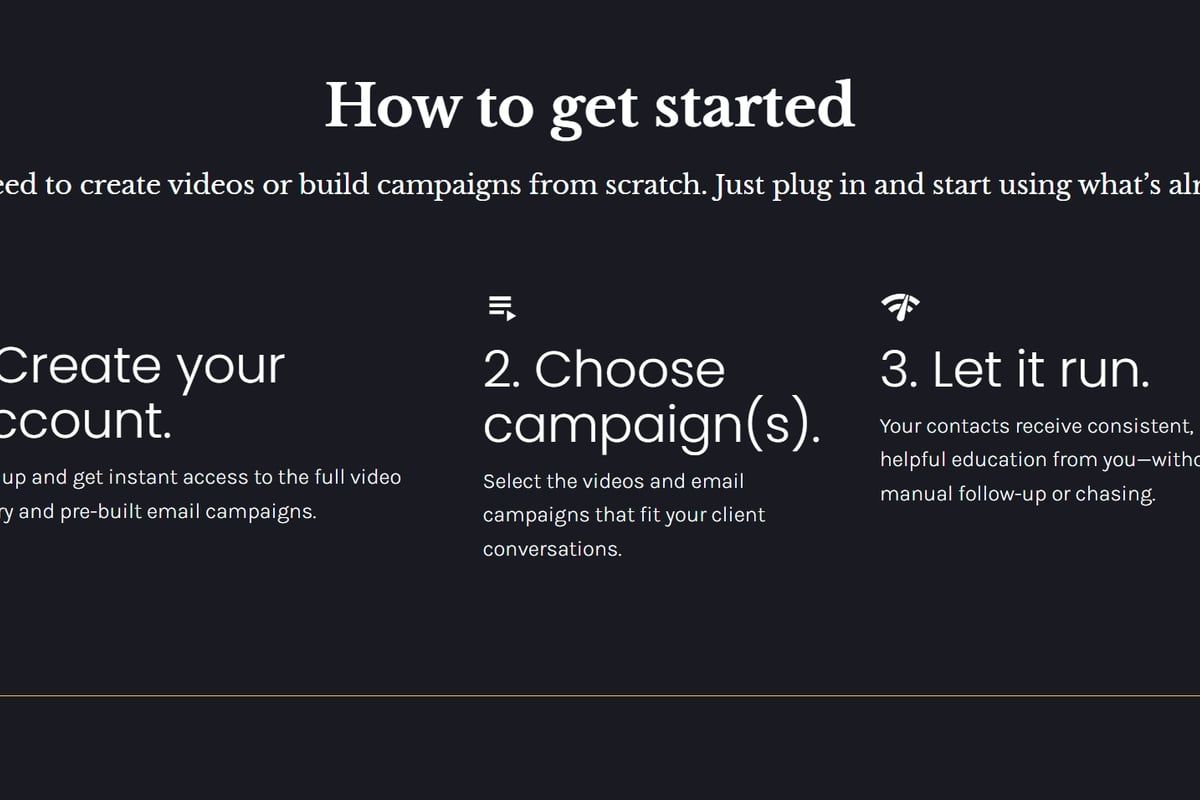
For advisors focused on client education and structured systems, the WebPrez Essentials Plan provides campaign templates and video content designed specifically for this workflow-turning complex financial concepts into sequences that prospects actually engage with.
Step 5: Test Before You Scale
Send yourself through the sequence first. Does every link work? Do the emails render correctly on mobile? Is the tone consistent?
Then test with 10-20 people before you connect it to every lead source you have. You'll catch typos, weird formatting, and emails that don't quite land the way you expected.
Advanced Automation Strategies
Once you have one campaign running, you can layer in more sophisticated approaches. These aren't necessary on day one, but they're where automated marketing for financial advisors gets really powerful.
Behavior-Based Branching
Not everyone engages the same way. Some people open every email. Others open one and go dark for three weeks.
Branching lets you create different paths based on behavior:
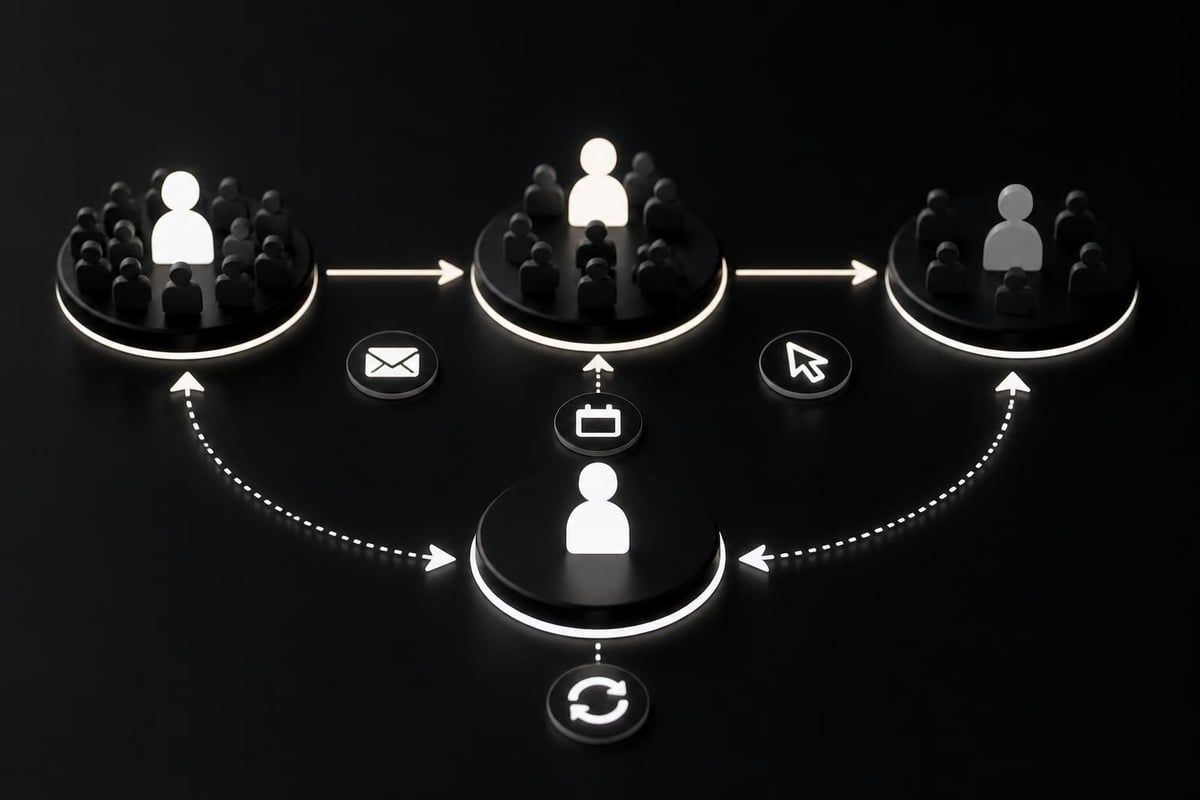
- High engagement path: Someone opened emails 1-3 and clicked the video? Send them a more direct calendar invitation in email 4.
- Low engagement path: Someone hasn't opened the last two emails? Send a "break-up" email ("I'll stop filling your inbox, but here's how to reach me if your situation changes") or move them to a less frequent nurture sequence.
This keeps your sequences relevant and prevents you from annoying people who clearly aren't interested right now.
Multi-Channel Coordination
Email is the backbone, but it's not the only channel. Smart automation coordinates multiple touchpoints:
- Email sequence delivers educational content
- Retargeting ads on Facebook/LinkedIn reinforce your message
- SMS reminder the day before a scheduled call
- Direct mail piece (yes, physical mail still works) arrives mid-sequence
The key is coordination. Each channel should reference the others and feel like part of the same conversation, not random disconnected messages.
Reactivation Campaigns
You've got people in your CRM who went cold six months ago. Maybe they were interested but the timing wasn't right. Maybe they got busy and forgot.
A reactivation campaign is a short 3-email sequence designed to re-engage dormant prospects:
- Email 1: "It's been a while-here's what's changed" (new regulation, market shift, product update)
- Email 2: Value-add resource related to current events
- Email 3: Simple question: "Still thinking about [original topic]? Let's talk."
You're not being pushy. You're giving people permission to re-engage if their situation has evolved.
Measuring What Matters
You can't improve what you don't measure. But most advisors track the wrong metrics.
Vanity metrics that don't matter much:
- Total email list size
- Open rates in isolation
- Social media followers
Actionable metrics that actually tell you if your system works:
- Conversion rate: What percentage of people who enter a sequence book a meeting?
- Engagement score: How many emails does the average person open before taking action?
- Time to conversion: How long between first touch and booked appointment?
- Sequence completion rate: Are people making it to email 5, or dropping off at email 2?
Here's a simple dashboard you should be able to pull weekly:
| Metric | This Week | Last Week | Change |
|---|
| New leads entered | 12 | 8 | +50% |
| Sequence completions | 7 | 6 | +17% |
| Meetings booked | 3 | 2 | +50% |
| Conversion rate | 25% | 25% | 0% |
If your conversion rate drops, look at which email is causing the drop-off. If people aren't completing the sequence, maybe it's too long or not relevant enough.
Common Mistakes and How to Avoid Them
I've seen advisors waste months on automation systems that don't work. Here are the most common mistakes:
Mistake #1: Automating Bad Content
Automation amplifies what you put into it. If your emails are boring, generic, or sales-pitchy, automating them just means more people get boring emails from you.
Fix: Write better emails before you automate. Test them manually with 10 people. If they don't respond, don't scale it.
Mistake #2: No Clear Next Step
Every email should have one job. Most advisor emails meander through three topics and end with "let me know if you have questions."
Fix: Each email gets one idea and one link. That's it. Email 3 is about annuity income riders? The only link is to a video explaining income riders. Don't also link to your calendar, your LinkedIn, and your latest blog post.
Mistake #3: Ignoring the Unsubscribes
If people are opting out at a high rate, your content isn't resonating. The average unsubscribe rate for B2B emails is 0.2-0.5%. If you're seeing 2-3%, something's wrong.
Fix: Survey people who unsubscribe. Ask why. You'll get brutal honesty that makes your next sequence better.
Mistake #4: Treating Everyone the Same
A 30-year-old who downloaded your term life insurance guide doesn't need the same follow-up as a 58-year-old who attended your Social Security webinar.
Fix: Create multiple sequences for different audience segments. Start with two or three. You don't need twenty sequences on day one.
Integration with Your Existing Workflow
Automated marketing for financial advisors only works if it fits into the way you already work. It can't be a separate system you have to remember to check.
CRM Integration
Your marketing automation should feed directly into your CRM. When someone books a meeting through your automated sequence, that should automatically create a new opportunity, assign it to you, and trigger whatever your next step is (send calendar invite, pre-meeting questionnaire, etc.).
Tools like the Smart Money Discovery system demonstrate how discovery and client education can work together-automated questionnaires surface conversation priorities before you ever pick up the phone.
Calendar Automation
When email 5 of your sequence says "book a call," that link should go to a calendar tool that:
- Shows only your available times
- Eliminates back-and-forth email scheduling
- Automatically sends confirmations and reminders
- Adds the meeting to both calendars
This removes friction. The easier you make it to book, the more bookings you get.
Follow-Up Task Triggers
When someone books a meeting, your system should automatically create a task for you: "Review prospect's background" or "Send pre-meeting questionnaire." You shouldn't have to remember to do this manually every time.
Scaling Beyond Your First Campaign
Once you've proven one campaign works, the question becomes: how do you scale without it becoming a full-time job?
Template-Based Expansion
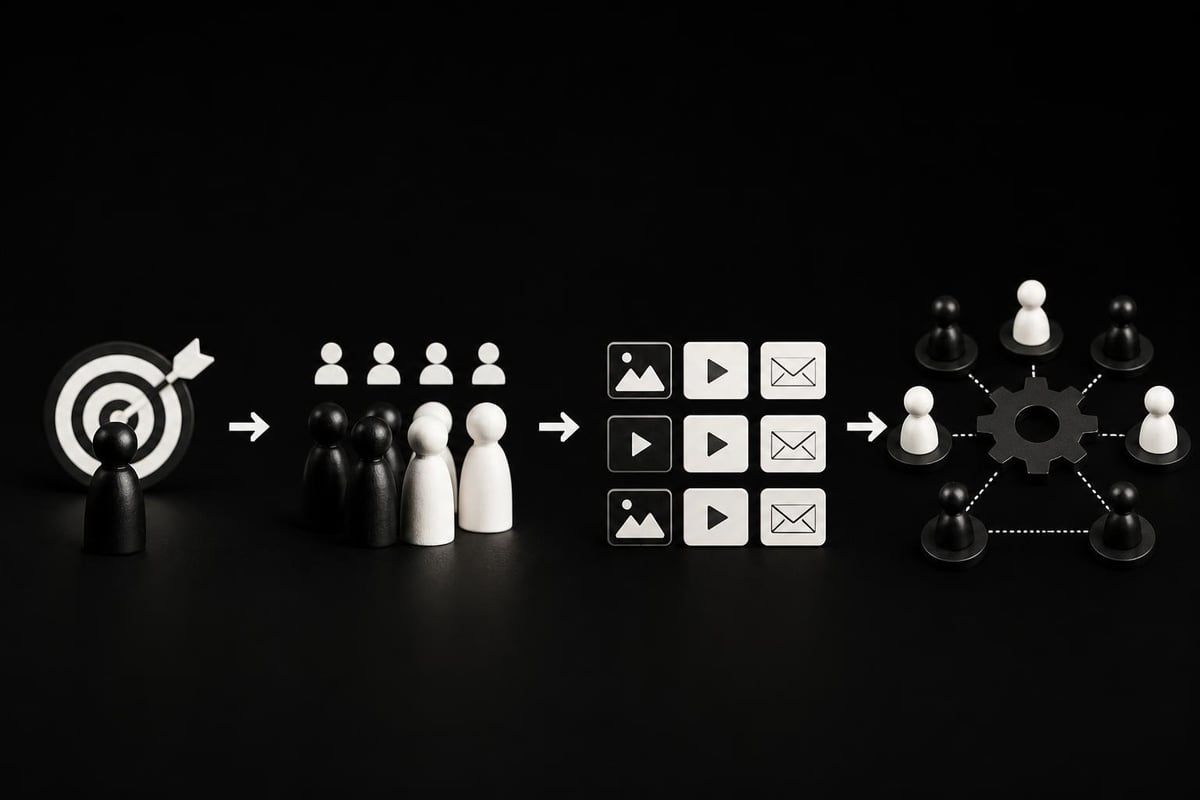
Your second campaign should use the same structure as your first. Same 5-email framework, different topic. This lets you build faster because you're not reinventing the approach each time.
Eventually, you'll have:
Each serves a different audience, but they all follow the same proven structure.
Content Repurposing
That webinar you did last month? Chop it into 3-minute clips for your email sequences. That blog post about RMD strategies? Turn it into a 2-email mini-series.
You're not creating new content from scratch every time. You're repurposing what you've already created into formats that work in automation.
Team Delegation
If you're growing, eventually someone else should manage your marketing automation. But they can't do it without clear systems.
Document:
- How to build a new sequence
- Email writing guidelines (tone, length, structure)
- Compliance review process
- How to pull and interpret metrics
This turns "ask me every time" into "follow the playbook."
FAQ
How long should an automated email sequence be?
Five to seven emails over 14-21 days is the sweet spot for most advisor sequences. Long enough to build trust and educate, short enough that people don't forget why they signed up. If someone doesn't engage after seven emails, move them to a longer-term nurture sequence with monthly touchpoints instead of continuing to email weekly.
Can I automate prospecting emails to cold contacts?
No. Automated marketing works for people who've expressed interest-downloaded something, attended a webinar, filled out a form. Cold outreach to purchased lists or people who never asked to hear from you is spam, violates CAN-SPAM regulations, and destroys your sender reputation. Build your automation for warm leads who've raised their hand.
What's a realistic conversion rate for advisor email sequences?
Between 5-15% of people who complete your sequence should book a meeting. If you're converting 20%+, your lead magnet is attracting highly qualified people (good problem to have). If you're under 5%, either your emails aren't relevant, your call-to-action isn't clear, or you're attracting the wrong audience with your lead magnet.
Should I personalize automated emails with merge tags?
Yes, but only where it makes sense. Using someone's first name in the greeting ("Hi Sarah,") feels natural. Trying to dynamically insert their city, company, or other details often feels robotic if it doesn't fit the context. The goal is relevance, not proving you have their data. Focus on sending the right content to the right segment rather than inserting personalization tokens everywhere.
Automated marketing for financial advisors isn't about removing the human element from your practice-it's about protecting it. When you build systems that handle education, follow-up, and nurture automatically, you free up the time and mental bandwidth to do what actually builds relationships: listening, advising, and solving problems. If you're ready to turn complex financial concepts into clear, repeatable client conversations without manually sending emails at 9 PM, WebPrez gives you the video library, campaign templates, and structured framework to make it happen this week.